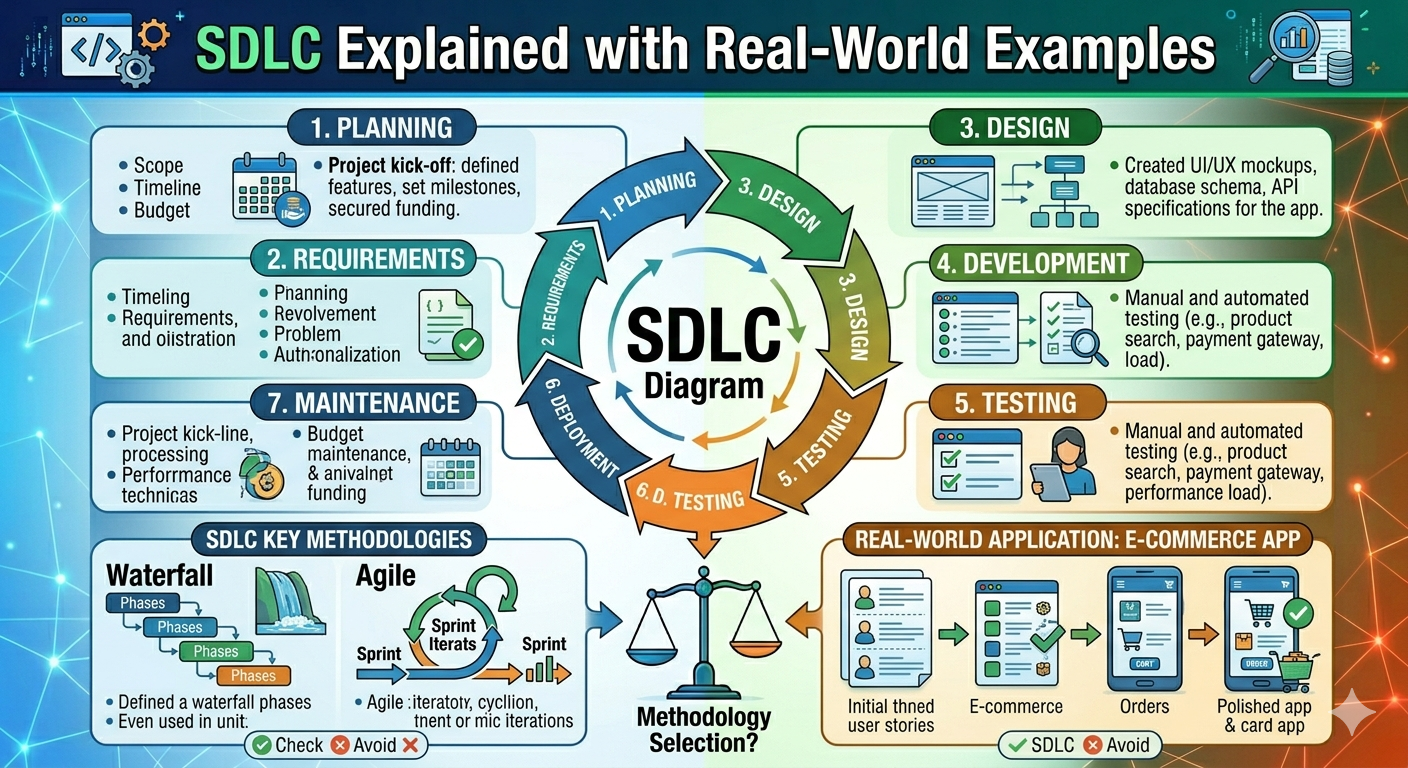
Agile vs Waterfall Model – Full Comparison
 Althaf Mohamed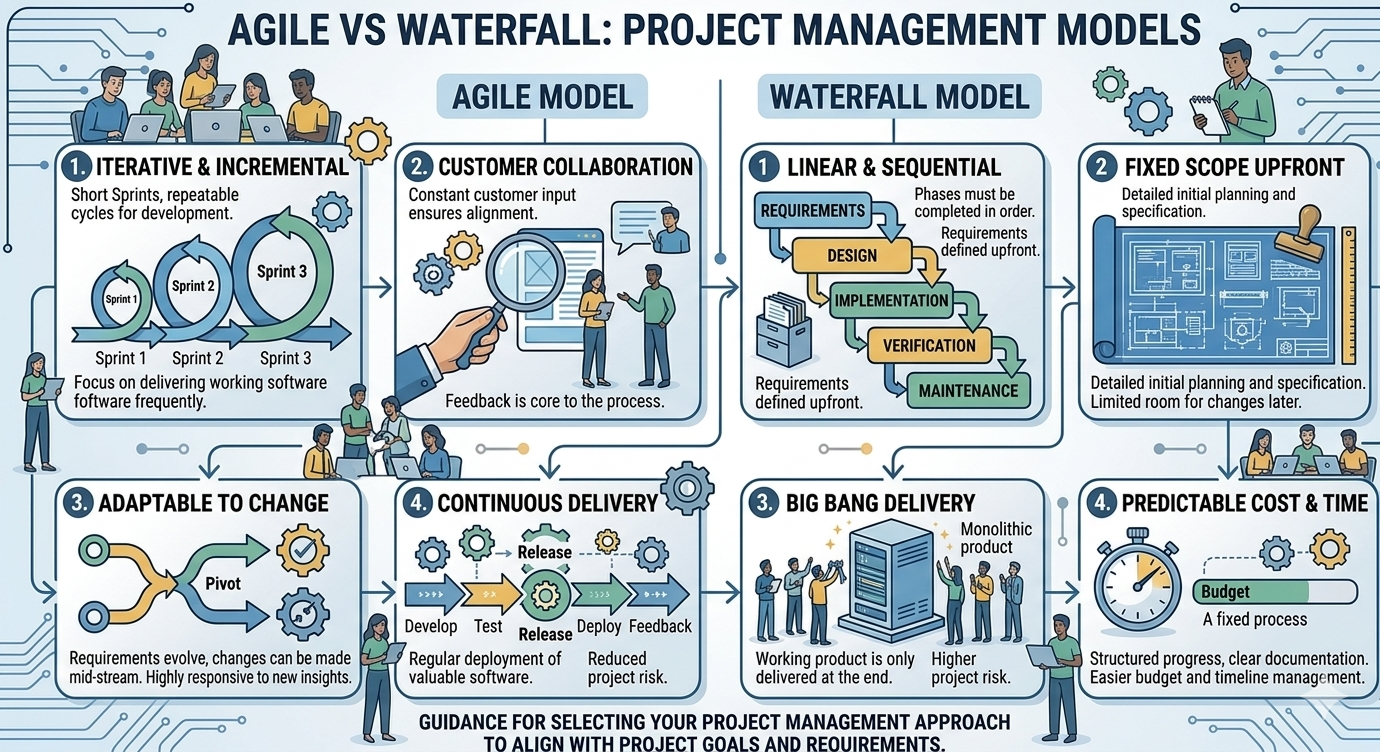
Choosing the right project management methodology is one of the most critical decisions for any development team. The two most prominent frameworks are Agile and Waterfall. While Waterfall is the traditional, linear approach, Agile is the modern, iterative alternative.
This guide provides a full comparison to help you decide which model fits your next project.
What is the Waterfall Model?
The Waterfall model is a linear and sequential approach to software development. In this model, the project is divided into distinct phases, and each phase must be completed before the next one begins. There is no turning back once a phase is finished.
When to use Waterfall model
When the requirements are very well known, clear and fixed.
Product definition is stable.
Technology is understood.
There are no ambiguous requirements
Sufficient resources with required expertise are
available freely
Principles of Waterfall Model
Low degree of customer involvement
Strong project documentation
Sequential structure of projects
Typical Phases of Waterfall Model
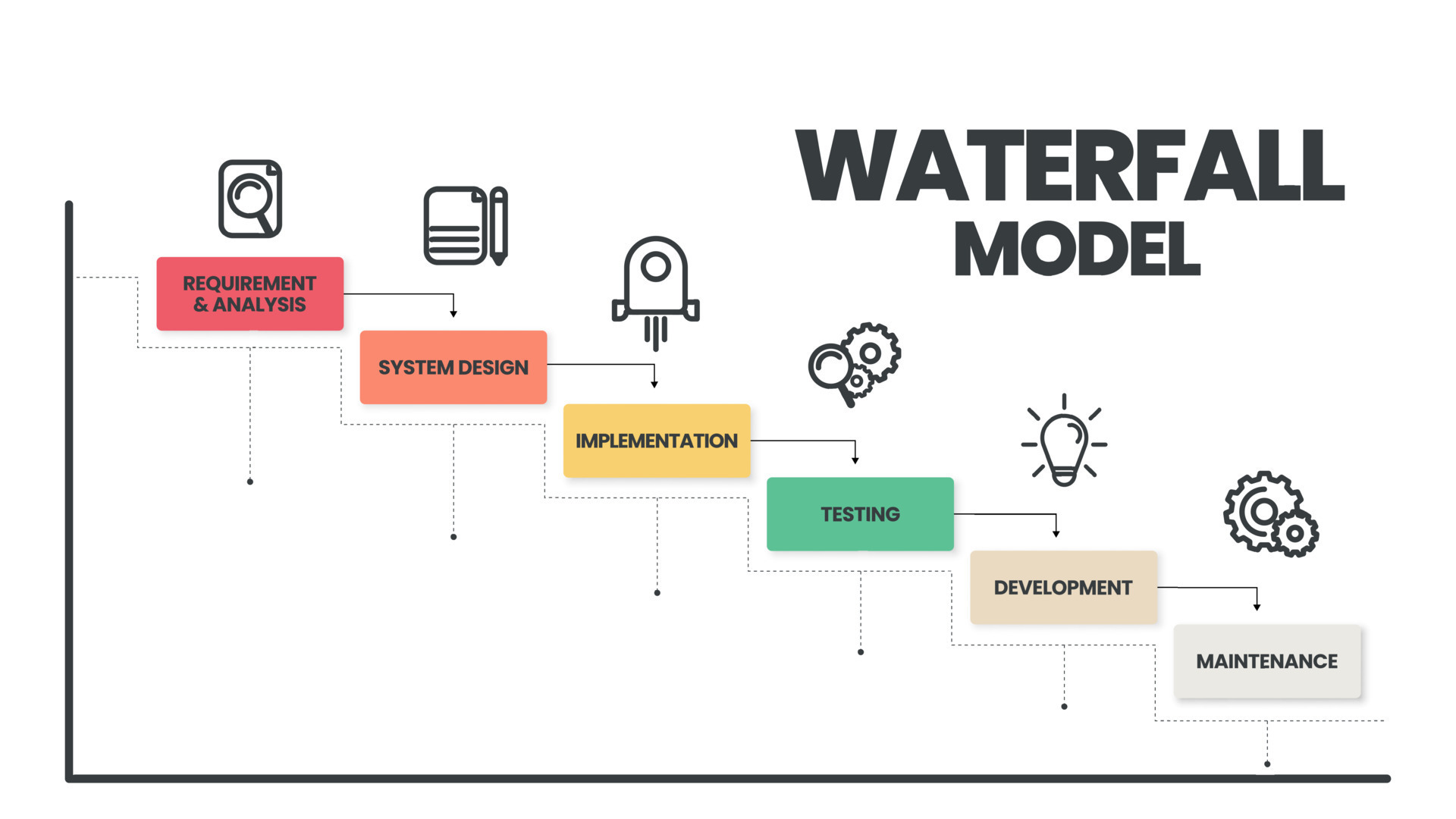
Requirements gathering and analysis: The software's requirements are gathered and analyzed at this phase. The requirements specification is the document that results from this phase.
Design: In this phase, the system architecture and design are created based on the requirements specification. The output of this phase is a document called the design specification.
Implementation: In this phase, the software is developed based on the design specification.
Testing: In this phase, the software is tested to ensure that it meets the requirements specified in the requirements specification.
Deployment: In this phase, the software is released and deployed to the end-users.
Maintenance: In this phase, the software is maintained and updated to fix bugs and add new features.
What is Agile Methodology?
The Agile methodology is an incremental and iterative approach to software development that puts a focus on communication, adaptability, and quick iteration. It’s based on the Agile Manifesto, a set of guiding principles that prioritizes client satisfaction, continuous feedback, and the ability to adapt to changing requirements.
The Agile methodology focuses on providing value to the customer as rapidly and effectively as possible while being flexible and adaptive. Agile development methods are built on iterative development cycles, also known as "sprints." The team concentrates on delivering a certain set of features or functionality during each sprint, which typically lasts two to four weeks. The team evaluates its performance at the conclusion of each sprint, shows stakeholders the new features, and plans the following one.
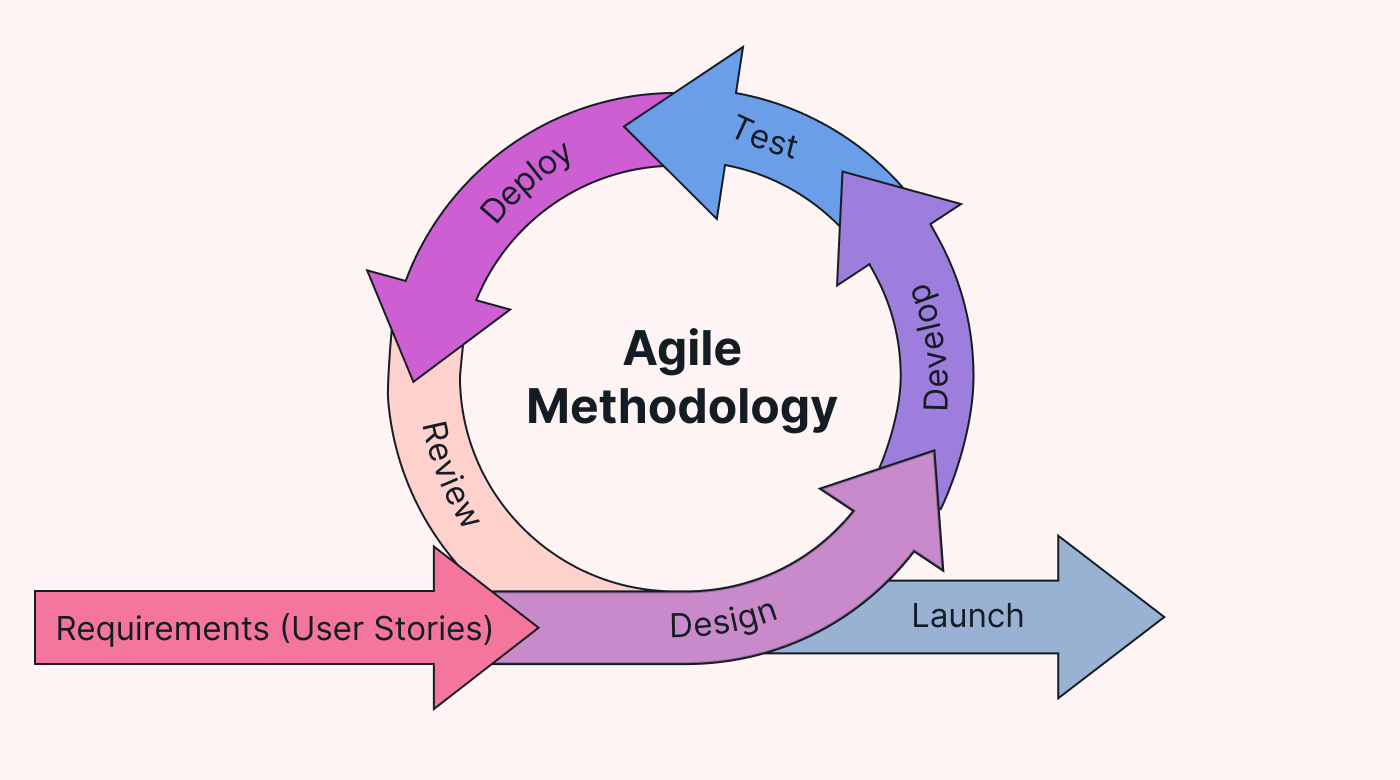
Key Components of Agile Methodologies
Backlog: A prioritized list of features.
Sprints: Short cycles of development.
Scrum Meetings: Daily check-ins to discuss progress and roadblocks.
Continuous Feedback: Regular input from stakeholders to refine the product.
Types of Agile Methodologies
Scrum
Extreme Programming
Lean Development
Kanban
Disciplined Agile Delivery (DAD)
Key Differences between Agile vs Waterfall
Feature | Waterfall | Agile |
|---|---|---|
Structure | Linear and sequential | Iterative and cyclical |
Flexibility | Rigid; changes are hard to implement | Highly flexible; adapts to changes easily |
Requirements | Defined upfront at the start | Evolve throughout the project |
Customer Involvement | Only at the beginning and end | Continuous throughout the process |
Delivery | One final product at the end | Frequent small releases |
Testing | Happens after the build phase | Happens concurrently with development |
When need to use | Requirements are fixed and clear | Requirements are expected to change |
Strengths & Weakness of Waterfall Methodology
Strengths
Waterfall methodologies often begin with a detailed requirements gathering phase that ensures a clear understanding of the project goals and scope.
Waterfall methodologies typically have well-defined processes and procedures that can help ensure consistency and quality throughout the development lifecycle.
Waterfall methodologies' linear structure can make the project's end predictable, making it simpler to manage expectations and allocate resources.
Waterfall methodologies frequently include specialized testing and quality assurance processes, which can help ensure that the final product satisfies the required standards.
Weakness
It can be difficult to adapt to changing requirements or add new requirements while using traditional development approaches since they can be rigid and inflexible. Delays, cost overruns, and a product that doesn't entirely satisfy the user's needs are possible outcomes of this.
Waterfall methodologies often have limited opportunities for feedback and iteration, which can make it difficult to identify and address issues early in the development process. This can result in costly rework or the need to compromise on the final product.
Waterfall methodologies can be prone to cost and time overruns due to the rigid nature of the process and the difficulty of predicting all possible issues and requirements at the outset.
Testing is usually performed only after the development phase is complete. As a result, defects may remain hidden until much later in the project.
The customer does not receive a working product until most or all phases are completed. This means stakeholders cannot test the software or provide meaningful feedback early in the process.
Strengths & Weakness of Agile Methodology
Strengths
Development team can react swiftly and effectively to shifting demands and conditions because to the Agile methodology's flexibility and adaptability. Because of this, it works well for software development projects that are complex or changing quickly.
Customer satisfaction is given top priority by the Agile methodology, which concentrates on providing value to the client quickly and effectively. This increases the likelihood that the product will satisfy the needs and expectations of the consumer and achieve market success.
The Agile methodology, which strongly emphasizes cooperation and teamwork, encourages cross-functional teams and regular communication among team members. By doing this, it is ensured that everyone is working toward the same goals and that issues are discovered quickly.
The Agile methodology places a strong emphasis on continuous improvement, with regular review and retrospective sessions to pinpoint problem areas and modify the development process as necessary. This makes it possible to guarantee both the team's continuous learning and improvement as well as the high quality of the final product.
Instead of waiting until the entire project is finished, Agile delivers usable features regularly. Each sprint produces a potentially deployable increment of the product, allowing stakeholders to see progress and sometimes start using parts of the system early.
Agile helps identify technical, business, and usability issues early. Because development and testing happen continuously, problems are detected and resolved before they become major obstacles.
Weakness
It can be challenging to predict the outcome of the project or estimate the time and resources needed to finish it because the agile methodology is meant to be flexible and adaptable. For clients that need a high level of predictability and confidence, this can be difficult.
Agile emphasizes face-to-face communication and collaboration, which can be difficult for teams who are distributed across different time zones or locations. This may make it more challenging to continue productive collaboration and communication, which may have an effect on the project's success.
The culture and team dynamics are crucial for the success of the Agile methodology. The Agile methodology may not be effective if team members cannot collaborate well or do not have a shared vision for the project.
Agile methods are ideal for dynamic projects; however, large, structured projects, especially those with strict regulatory constraints, can provide significant management challenges. These projects often involve careful planning, significant documentation, and compliance mechanisms, including permissions, to ensure compliance with applicable regulations.
Both Agile and Waterfall are effective software development approaches, although they serve distinct goals. Waterfall is best suited for projects with clearly defined and predictable requirements, as well as those that require a structured and sequential approach. Agile, on the other hand, is suitable for modern software development environments in which requirements change frequently and rapid delivery with continuous improvement is essential.
Choosing between Agile and Waterfall is totally dependent on your project's scope, team structure, and client expectations. While Waterfall delivers simplicity and predictability, Agile allows for flexibility and faster feedback cycles. In many real-world scenarios, businesses use a hybrid approach to get the benefits of both methods.
Ultimately, understanding both methodologies allows teams to select the right approach and ensure successful project delivery with better efficiency and quality.
Frequently Asked Questions
Althaf Mohamed
Technical Author
Software Engineer and technical author specializing in web architectures, databases, and secure distributed systems.
Trending Now
Recent Posts
Beginner's Guide to Software Development: Everything You Need to Know in 2026
May 30, 2026
TypeScript vs JavaScript - Key Differences
May 04, 2026
API Status Codes & Meanings
May 04, 2026
What is an Application Programming Interface (API)
May 04, 2026
Network Security Basics – Threats & Protection Methods
May 04, 2026