Algorithm vs Program - Key Differences
 Althaf Mohamed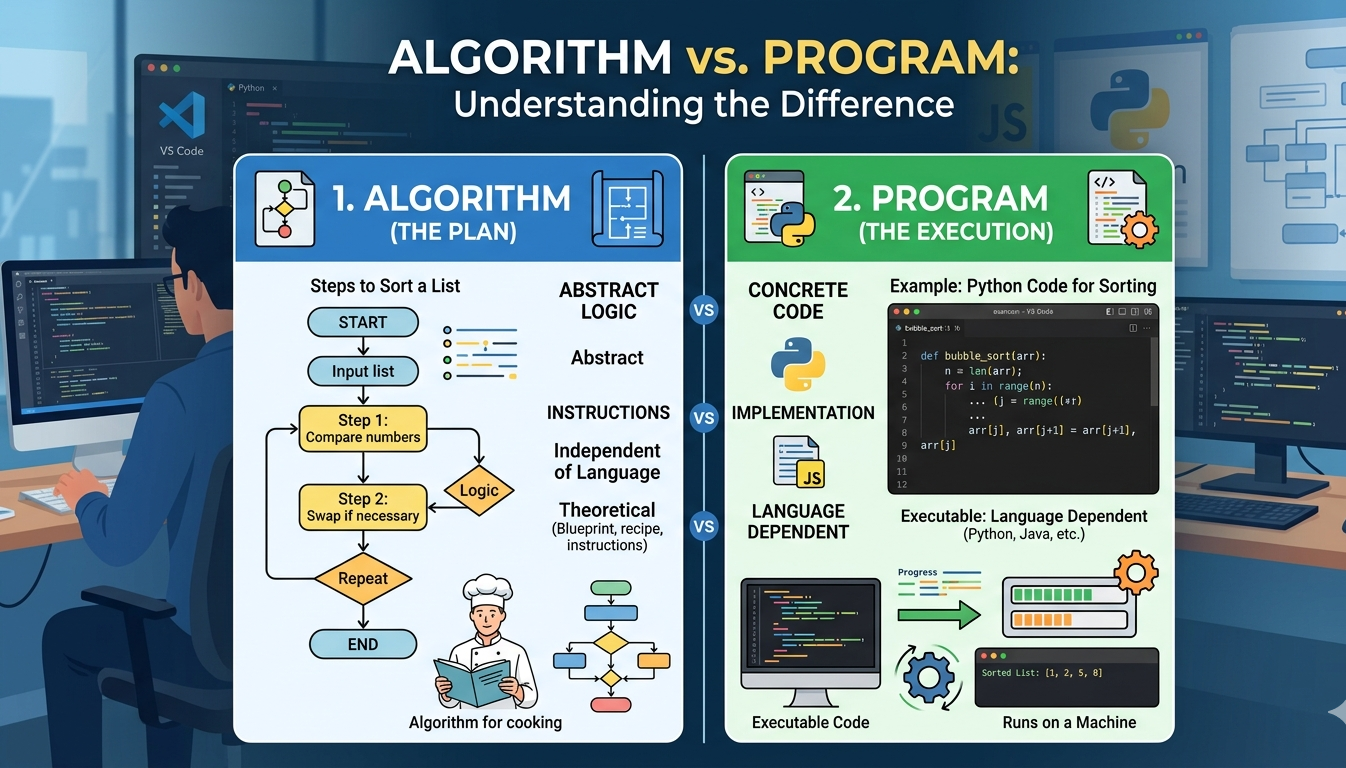
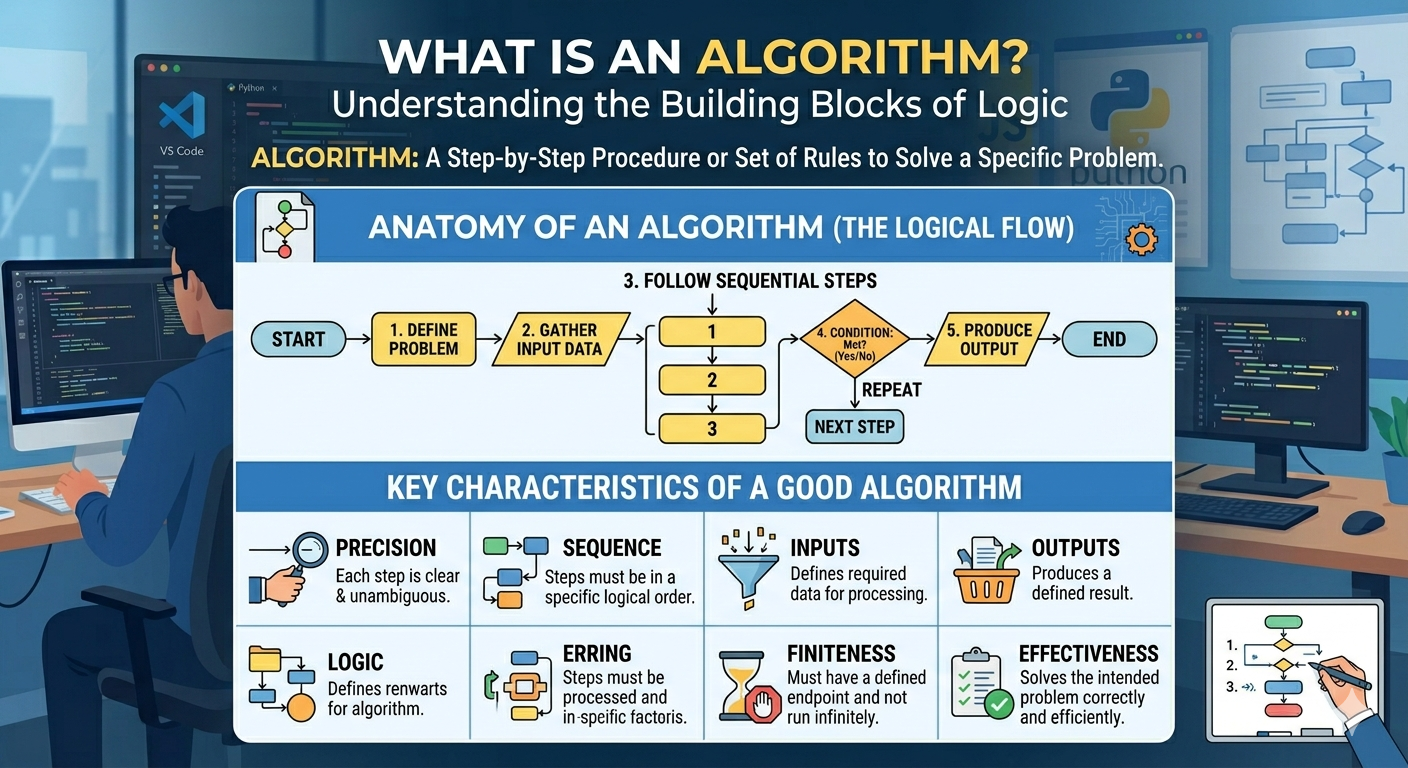
Algorithms and programs are closely related concepts in computer science, but they are not same. An algorithm is a logical procedure for solving a problem, but a program is how that solution is implemented using a programming language. Understanding the differences between them is critical for any developer or computer science student.
Algorithm | Program |
|---|---|
It is a well-defined, logical, systematic approach for solving various problems. | A set of instructions for a computer to follow as known to as a software. A program can be a collection of algorithms, or it can be totally void of algorithms. |
An algorithm is a set of abstract procedures for converting one set of linked data into a distinct set of derived data. | A program’s elements may or may not be conceptually connected. |
It is written in plain English and can be understood by everyone who are not at all familiar with programming. | Depending on the purpose, the software is being built for, it might be written in any programming language such as Python, Java, C++, JavaScript, or any other language. |
It can be expressed in a variety of ways, including natural language, flow charts, pseudocode, and computer languages. | It can be expressed in a variety of ways, including natural language, flow charts, pseudocode, and computer languages. In a computer language, we write computer programs. The data is then translated into a language that can be understood by any computer system via a compiler or interpretation. |
An individual can carry out such an algorithmic. | A computer always implements a program. |
Simple explanation of an algorithm refers to the conceptual logic behind solving a problem, while a program is the actual coded implementation of that logic. For example, in making tea, the algorithm involves a sequence of steps: boiling water, adding tea leaves, sugar, and milk, followed by serving the tea. The program would be an automated system that executes these steps exactly to brew tea automatically.
Advantages & Disadvantages of Algorithm
Advantages
Easy to Understand - Algorithms are usually written in simple language, pseudocode, or flowcharts, making them easier to understand even before coding begins.
Step-by-Step Problem Solving - Algorithms solve problems in a systematic and organized manner by breaking complex tasks into smaller steps.
Improves Efficiency - A well-designed algorithm can reduce execution time and optimize system performance.
Reusability - Algorithms can be reused for solving similar problems in different applications.
Helps in Error Detection - Since algorithms define the logic clearly, logical mistakes can be identified before writing actual code. This will reduces debugging time during development.
Language Independent - Algorithms are not tied to any specific programming language.
Simplifies Complex Problems - Complex tasks can be divided into smaller, simpler steps using algorithms.
Disadvantages
Time-Consuming to Design - Creating a good algorithm for complex systems may require significant planning and analysis. They need advanced algorithm design techniques.
Difficult for Complex Problems - Some algorithms become very complicated when solving large-scale or advanced problems. Understanding and maintaining them can be challenging.
No Visual Representation by Default - Algorithms written in plain text may be harder to visualize compared to flowcharts or diagrams.
Can Be Inefficient - Poorly designed algorithms may consume more memory and increase execution time, reduce application performance as well.
Not Directly Executable - Algorithms cannot run directly on a computer, first they must be converted into a program using a programming language.
Maintenance Challenges - Updating or modifying large algorithms can become difficult, especially in enterprise-level systems. If changes in one step may affect the entire process.
Advantages & Disadvantages of Program
Advantages
Automation of Tasks - Programs help automate repetitive and time-consuming tasks, reducing manual effort and improving productivity.
Faster Processing - Computer programs can process large amounts of data much faster than humans.
Accuracy and Reliability - Programs perform calculations and operations with high accuracy when designed correctly.
Saves Time and Effort - Programs reduce the amount of human work needed to complete tasks.
Data Storage and Management - Programs can efficiently store, organize, and retrieve large volumes of data.
Improves Communication - Programs provide instant global communication via email systems, messaging apps, and video conferencing platforms.
Increases Business Efficiency - Programs help businesses manage operations efficiently by automating workflows and generating reports.
Disadvantages
Bugs and Errors - Programs may contain coding mistakes or logical errors known as bugs. These bugs can cause Incorrect outputs, System crashes and Security vulnerabilities.
Security Risks - Poorly developed programs may be vulnerable to Hacking, Malware and Data breaches.
Maintenance Costs - Programs require regular updates, debugging, and maintenance. So, maintaining large software systems can be expensive and time-consuming.
Risk of Data Loss - Program failures or crashes may result in loss of important data if backups are not maintained.
Learning Curve - Some programs are difficult for beginners to understand and use effectively.
Dependency on Technology - People and businesses become highly dependent on programs and computer systems. If the system fails, operations may stop completely.
Hardware and Software Requirements - Some programs require powerful hardware and updated software environments to function properly.
In the process of creating software, an algorithm and a program collaborate. The algorithm provides the solution logic, while the program converts that logic into executable instructions for a computer. A good algorithm leads to efficient and optimized programs, which is why understanding algorithms is critical before developing code.
Frequently Asked Questions
Althaf Mohamed
Technical Author
Software Engineer and technical author specializing in web architectures, databases, and secure distributed systems.
Trending Now
Recent Posts

Beginner's Guide to Software Development: Everything You Need to Know in 2026
May 30, 2026
TypeScript vs JavaScript - Key Differences
May 04, 2026
API Status Codes & Meanings
May 04, 2026
What is an Application Programming Interface (API)
May 04, 2026
Network Security Basics – Threats & Protection Methods
May 04, 2026