What is Business Process?
 Althaf Mohamed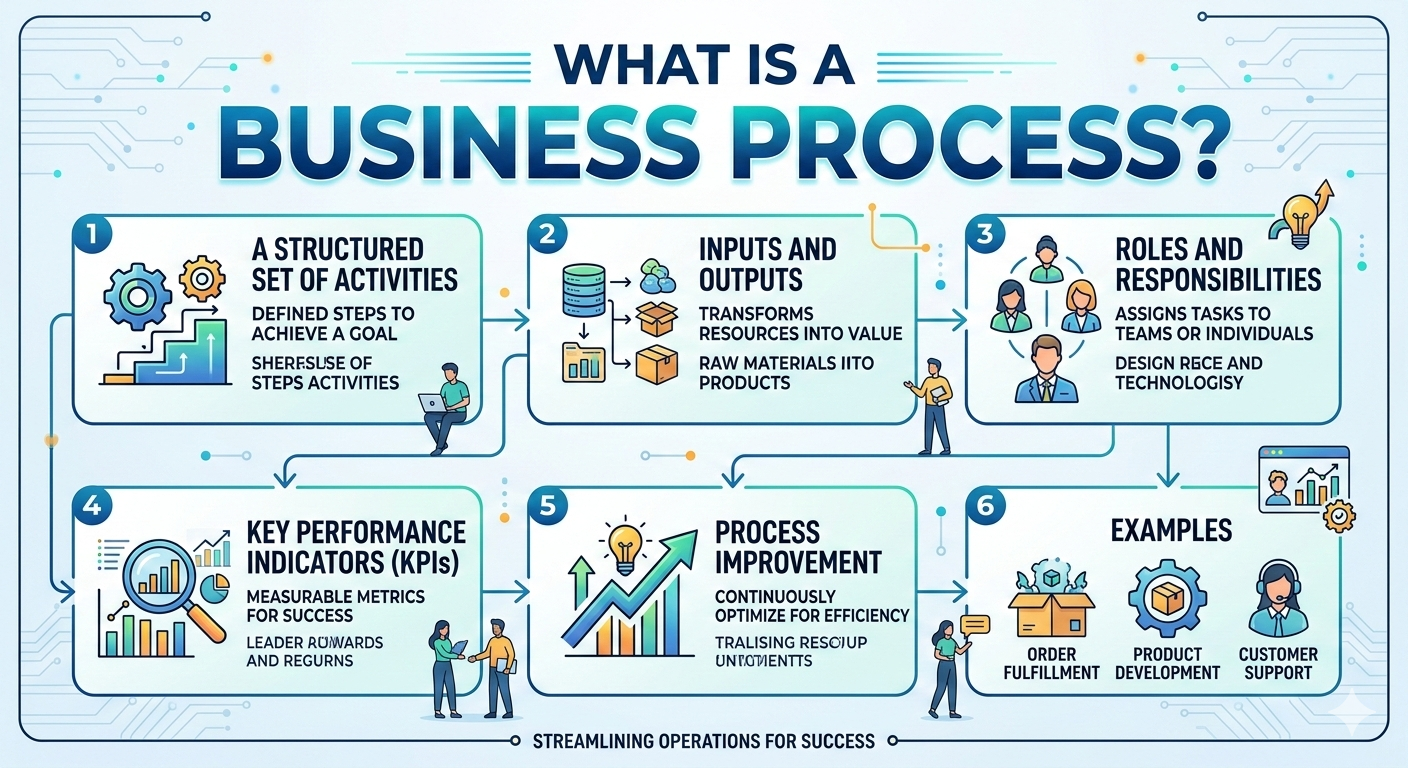
A business process is a broad category of structured, frequently chained activities or tasks carried out by personnel or machinery to produce a specific service or product for a particular user or consumer. Business processes are implemented in order to achieve a defined organization goal. And also, the impacts of all activities taken to advance toward a business goal can also be referred to as a business process.
What Is a Business Process?
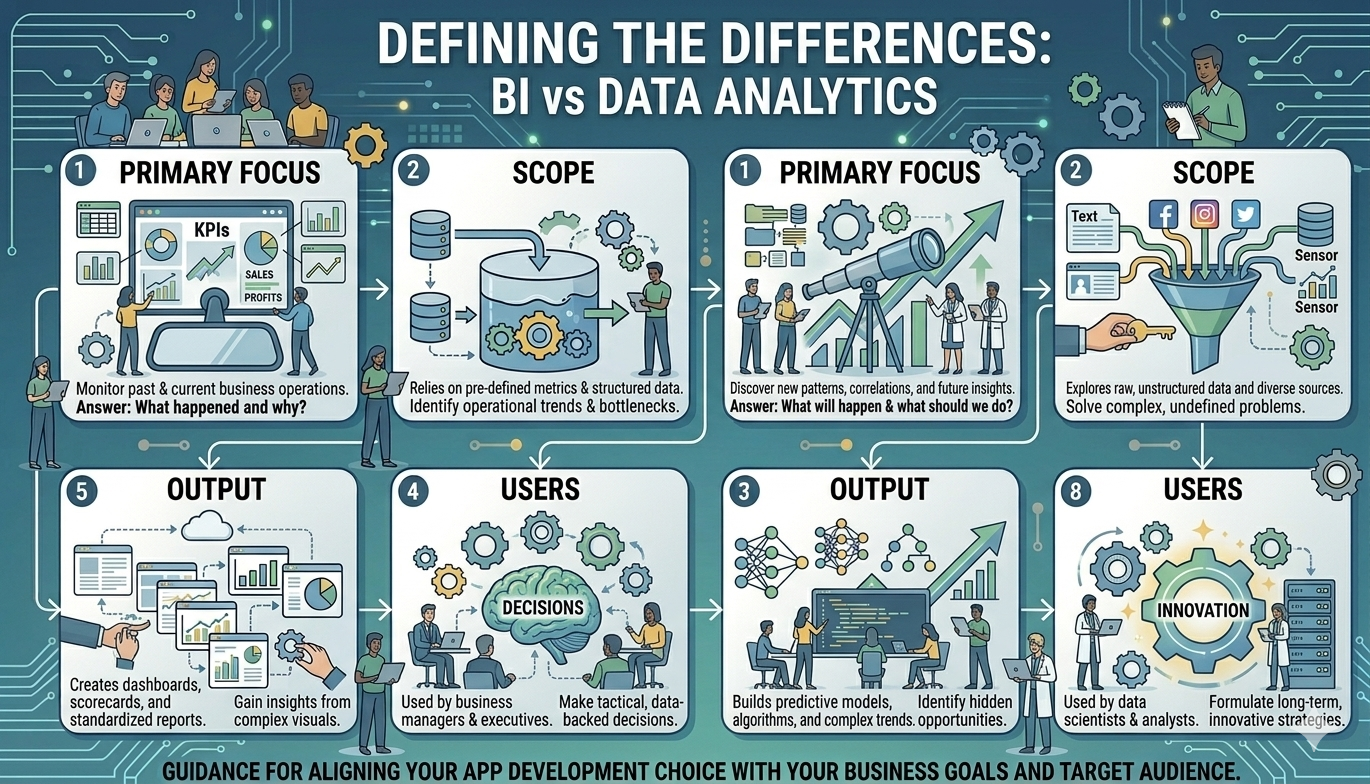
A business process is a set of connected activities or tasks that are carried out in a certain order to accomplish a specified objective. A completed service, a delivered product, or a business outcome are examples of the useful outputs that these activities produce from certain inputs, such as customer demands, information, materials, or resources.
In simple terms, a business process explains how tasks are completed within a company. It outlines the procedures that workers or systems adhere to in order to finish a task effectively and reliably. Every stage of the procedure adds value and contributes to the final outcome.
For example, in an online shopping system, the process begins when a customer places an order on the website. The payment is then verified and processed. The inventory system then determines whether the requested product is in stock. Warehouse workers pack the product and get it ready for delivery if it is available. The customer receives the order after the shipping provider delivers the package to them.
Although the fact that these tasks are carried out by different people and systems, they are all connected and work together to successfully deliver the acquired goods to the consumer. A business process is the entire set of actions.
Because they help organizations standardize operations, increase efficiency, reduce errors, and ensure consistent results, business processes are crucial. Every organization relies on clearly defined business processes to successfully accomplish its objectives, whether it is handling order processing, hiring staff, or providing customer support.
Importance of a business process
Business procedures have always been essential to an organization’s structure and efficient operation. The following benefits of a well-planned and strategic business process for a company.
It Can save the time – The aphorism “Time is money” has been around for a very long time and is still true today. Time is saved for both company staff and consumers when the business processes are coordinated and clear. Customers value their time, thus keeping the promises of timely delivery can boost their satisfaction.
Reduced costs and risk – A business process reduces costs and risk by outlining the most effective ways to complete the tasks while taking into account potential future weaknesses.
Reduced costs and risk – A business process reduces costs and risk by outlining the most
effective ways to complete the tasks while taking into account potential future
weaknesses.
Adaption of new technology – Business procedures frequently change and get better over time. By enhancing business processes in accordance with the most recent technology, the organization adopts new technologies to stay grounded.
Additional client focus – A business procedure is an action that puts the consumer first. It keeps
the business informed about what customers want and what they think of the
product or service.
Business Process Lifecycle
The Business Process Lifecycle is a continuous sequence of stages for designing, implementing, monitoring, and improving business processes. It assists organizations in ensuring that their workflows are efficient, effective, and aligned with business objectives. Companies can use this lifespan to find inefficiencies, reduce costs, and continuously optimize processes.
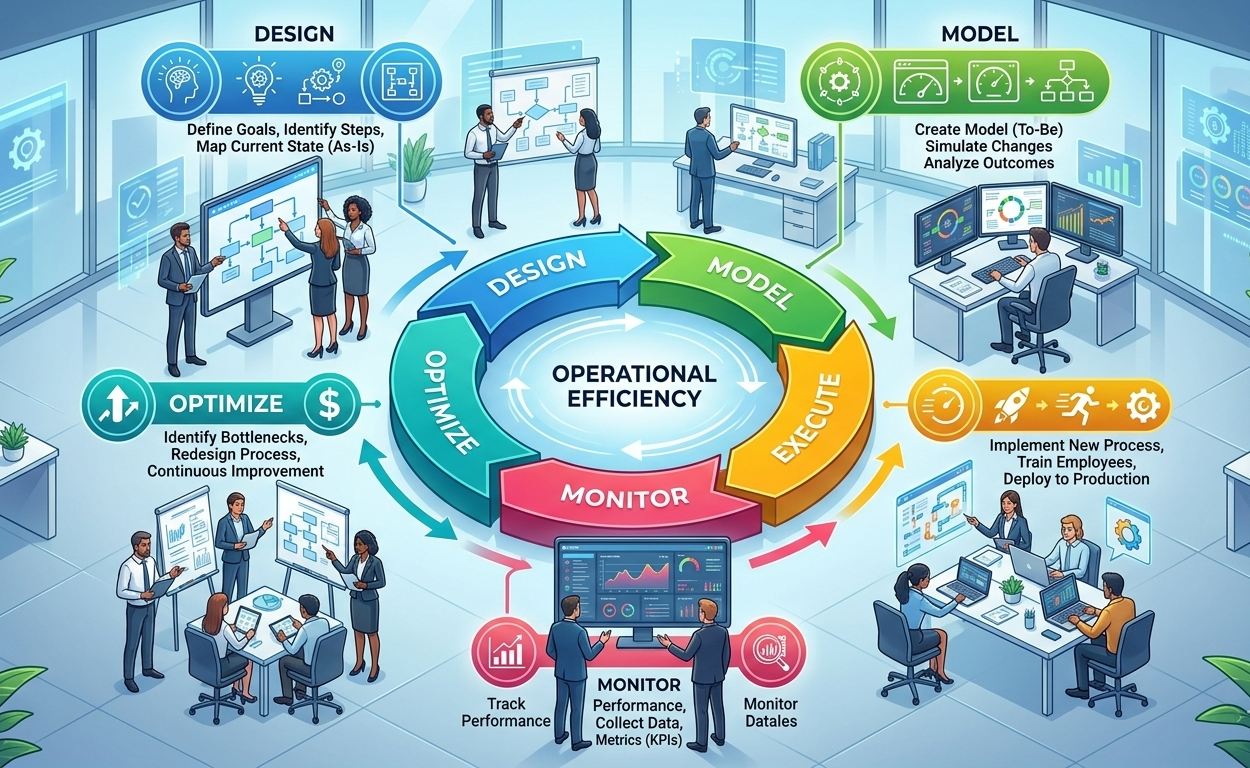
Process Design
In this stage, the organization determines the process's objectives, activities, inputs, outputs, and responsibilities. The purpose is to develop a clear blueprint for how the process should operate in order to reach the intended result.
Process Modeling
After the process is designed, it is visually represented using flowcharts or Business Process Model and Notation (BPMN) diagrams, which make it easier to grasp the sequence of tasks, decision points, and interactions among departments or systems.
Process Execution
During execution, the process is made operational. Employees or automated systems carry out the prescribed tasks in accordance with the designed process to get the desired results.
Process Monitoring
The organization monitors process performance using metrics such as processing time, cost, error rates, and customer satisfaction. Monitoring identifies bottlenecks and areas where the process may not be working as planned.
Process Optimization
Based on monitoring results, improvements are made to remove inefficiencies, reduce delays, and increase quality. The optimized process is then re-implemented, and the cycle begins again.
Business Process Management (BPM)
Business Process Management (BPM) is a structured strategy used by organizations to analyze, plan, execute, monitor, and continually improve business processes. The goal of BPM is to improve workflow efficiency, consistency, and alignment with business objectives.
In simple terms, BPM helps organizations review how work is done, find inefficiencies, and improve each step so that activities are finished faster, with fewer errors, and at a lower cost. BPM frequently entails documenting processes, utilizing automation technologies, assessing performance, and making continuous changes.
For example, a company could utilize BPM to automate order approvals, inventory checks, and shipment notifications to improve the client order process. This reduces the amount of manual work required and speeds up delivery.
Goals of Business Process Management (BPM)
Improve Efficiency
BPM removes needless steps, reduces delays, and automates repeated tasks. This allows staff to execute tasks more swiftly and efficiently.
Reduce Costs
By eliminating inefficiencies and errors, BPM minimizes operating costs and the need for rework.
Increase Quality
Standardized processes ensure that tasks are completed consistently, resulting in more accurate output and fewer errors.
Enhance Customer Satisfaction
Faster service, more accurate outputs, and improved responsiveness enhance the overall customer experience.
Support Digital Transformation
BPM helps organizations adopt modern technologies such as workflow automation, cloud platforms, and analytics to modernize operations and remain competitive.
Challenges in Managing Business Processes
Managing business processes is critical to increasing organizational efficiency, but it is not always easy. Many companies face challenges that might reduce productivity, increase costs, and prevent continuous growth. Understanding these difficulties enables companies to identify weaknesses and execute more effective solutions.
Poor Communication Between Departments
When departments fail to communicate efficiently, critical information may be delayed, misconstrued, or lost. For example, if the sales team does not notify the inventory department of a significant purchase, product shortages and customer delays may result. Clear communication lines and regular meetings help ensure that all teams remain aligned and working toward the same objectives.
Lack of Documentation
Employees may not fully comprehend how to carry out a process unless sufficient documentation is provided. This might result in inconsistent work, recurring errors, and challenges when training new employees. Documenting workflows, responsibilities, and procedures gives a clear reference for maintaining quality and consistency throughout the business.
Resistance to Change
Employees may be resistant to adopt new processes, technology, or ways of working, especially if they are familiar with the existing methods. The resistance can slow down process improvement initiatives and reduce the benefits of innovation. Organizations can overcome this difficulty by communicating the benefits of change to employees, including them in the process, and providing proper training and support.
Manual and Repetitive Tasks
Processes that rely primarily on manual work are frequently slower and more prone to human mistake. Employee productivity and job happiness can be reduced by repetitive duties. Routine activities can be automated utilizing software and workflow tools, which improves accuracy, speed, and efficiency.
Limited Performance Monitoring
Organizations that do not assess process performance find it difficult to discover bottlenecks, inefficiencies, and opportunities for improvement. Tracking Key Performance Indicators (KPIs) such as processing time, error rates, and customer satisfaction provides useful insights that aid in decision-making and continual optimization.
A business process is an organized sequence of operations that are designed to achieve a specific business goal. Business procedures, which range from order processing to staff management, serve as the foundation for organizational efficiency and consistency. Well-designed processes save time, reduce cost, improve quality, and increase customer satisfaction.
Understanding business processes and using Business Process Management principles allows organizations to streamline operations, adopt new technology, and remain competitive in a rapidly changing business environment.
Frequently Asked Questions
Althaf Mohamed
Technical Author
Software Engineer and technical author specializing in web architectures, databases, and secure distributed systems.
Trending Now
Recent Posts
Beginner's Guide to Software Development: Everything You Need to Know in 2026
May 30, 2026
TypeScript vs JavaScript - Key Differences
May 04, 2026
API Status Codes & Meanings
May 04, 2026
What is an Application Programming Interface (API)
May 04, 2026
Network Security Basics – Threats & Protection Methods
May 04, 2026