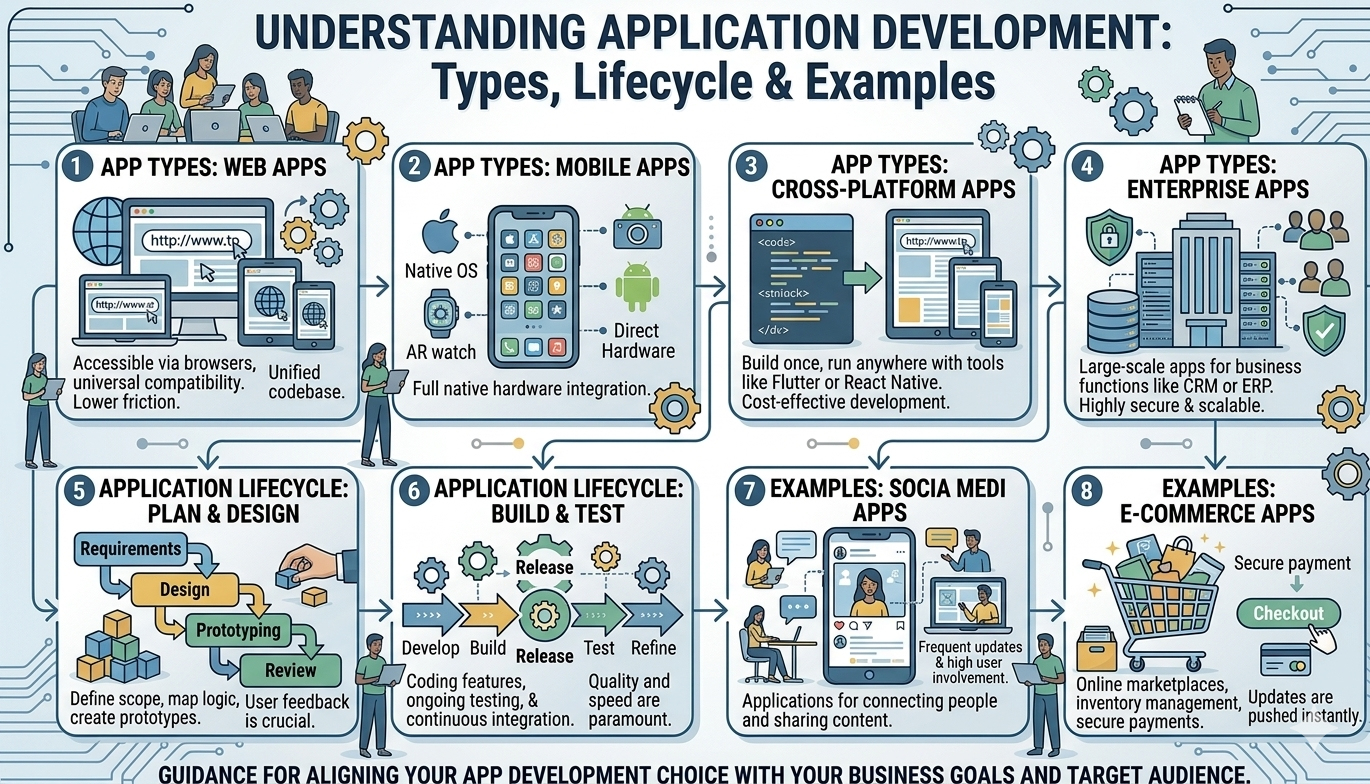
Differences Between Mobile Apps and Web Apps
 Althaf Mohamed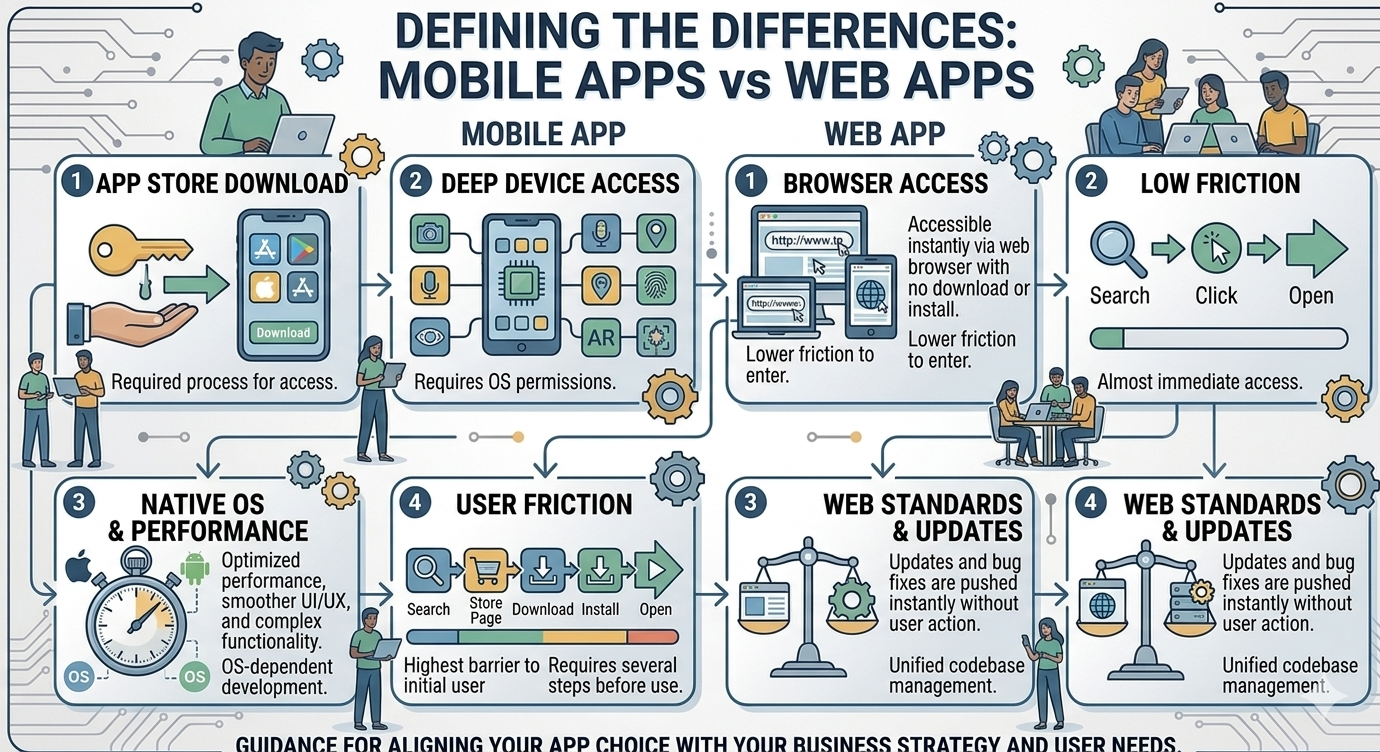
Choosing between a mobile app and a web app is a critical issue in modern application development. Both systems allow organizations to provide digital services to users, but they have substantial differences in terms of installation, performance, development costs, device access, and maintenance.
Understanding the main differences between mobile apps and web apps can help developers, startups, and organizations choose the right platform based on business goals, budget, and user expectations.
What Is a Mobile App?
A mobile app is a software application designed specifically for smartphones and tablets. Mobile apps are downloaded and installed through app stores such as Google Play Store and Apple App Store.
Mobile apps can be built as:
Native apps (platform-specific, such as Android Studio for Android and Xcode for iOS)
Cross-platform apps using frameworks such as Flutter and React Native
These apps offer high performance and deep integration with device hardware.
What Is a Web App?
A web app is an application that runs inside a web browser and does not require installation. Users access web apps through URLs using browsers such as Google Chrome, Mozilla Firefox, or Microsoft Edge.
Web apps are commonly built using technologies such as HTML, CSS, JavaScript, React, Next.js. Web apps are accessible from almost any device with an internet connection.
Different between Mobile App & Web App
Mobile App | Web App |
|---|---|
Mobile apps must be downloaded and installed from app stores. | Web apps run directly in a web browser without installation. |
Mobile apps usually provide better performance because they are built specifically for the operating system. | Web apps rely on browsers and internet connectivity, which can affect performance. |
Mobile apps can access device hardware like the camera, GPS, and contacts. | Web apps have limited access to device features. |
Mobile apps require users to update the application through app stores. | Web apps update automatically on the server side. |
Mobile apps often require separate development for Android and iOS platforms, which increases cost. | Web apps use a single codebase that works across all devices. |
Advantages & Disadvantages of Web Apps
Web apps also have many benefits, especially for startups and small businesses and also have limitations compared to mobile apps.
Advantages | Disadvantages |
|---|---|
Users can access web apps from any device using a browser without downloading anything. | Most web apps require a stable internet connection to function properly. |
Web apps are generally cheaper to develop because a single version works on multiple platforms. | Web apps cannot fully access device hardware features. |
Updates are applied instantly without requiring users to download a new version. | Web apps may be slower compared to native mobile applications. |
Web apps can usually be developed faster than mobile apps. |
Advantages & Disadvantages of Mobile Apps
Mobile apps offer several benefits, especially for businesses that require high performance and deeper device integration. Although mobile apps are powerful, they also have some drawbacks.
Advantages | Disadvantages |
|---|---|
Since mobile apps are built for specific platforms, they tend to run faster and smoother. | tend to run faster and smoother. Developing separate apps for Android and iOS can increase the overall cost. |
Many mobile apps can function even without an internet connection. | Mobile apps must follow strict guidelines and approval processes before being published in app stores. |
Mobile apps can use device features such as: Camera, GPS, Push Notification, Sensors. | Users must download and store the app on their devices. |
Mobile apps can provide a more customized and engaging user experience compared to web apps. |
Both mobile apps and web apps have their own strengths and limitations. Mobile apps are suitable for feature-rich and performance-sensitive applications because of their higher performance, offline capabilities, and full access to device functions. Web apps, on the other hand, are less expensive to design, do not require installation, and can be accessed instantly from any browser. Web apps are easier and less expensive to create, do not require installation, and can be viewed immediately from any browser.
The best choice depends on your business goals, budget, technical requirements, and user needs. In many cases, companies begin with a web app to prove their concept and then expand to a mobile app as their user base and feature requirements grow.
Frequently Asked Questions
Althaf Mohamed
Technical Author
Software Engineer and technical author specializing in web architectures, databases, and secure distributed systems.
Trending Now
Recent Posts

Beginner's Guide to Software Development: Everything You Need to Know in 2026
May 30, 2026
TypeScript vs JavaScript - Key Differences
May 04, 2026
API Status Codes & Meanings
May 04, 2026
What is an Application Programming Interface (API)
May 04, 2026
Network Security Basics – Threats & Protection Methods
May 04, 2026
.png?alt=media&token=11b33f62-1df1-4701-bcac-47fb77241c5e)