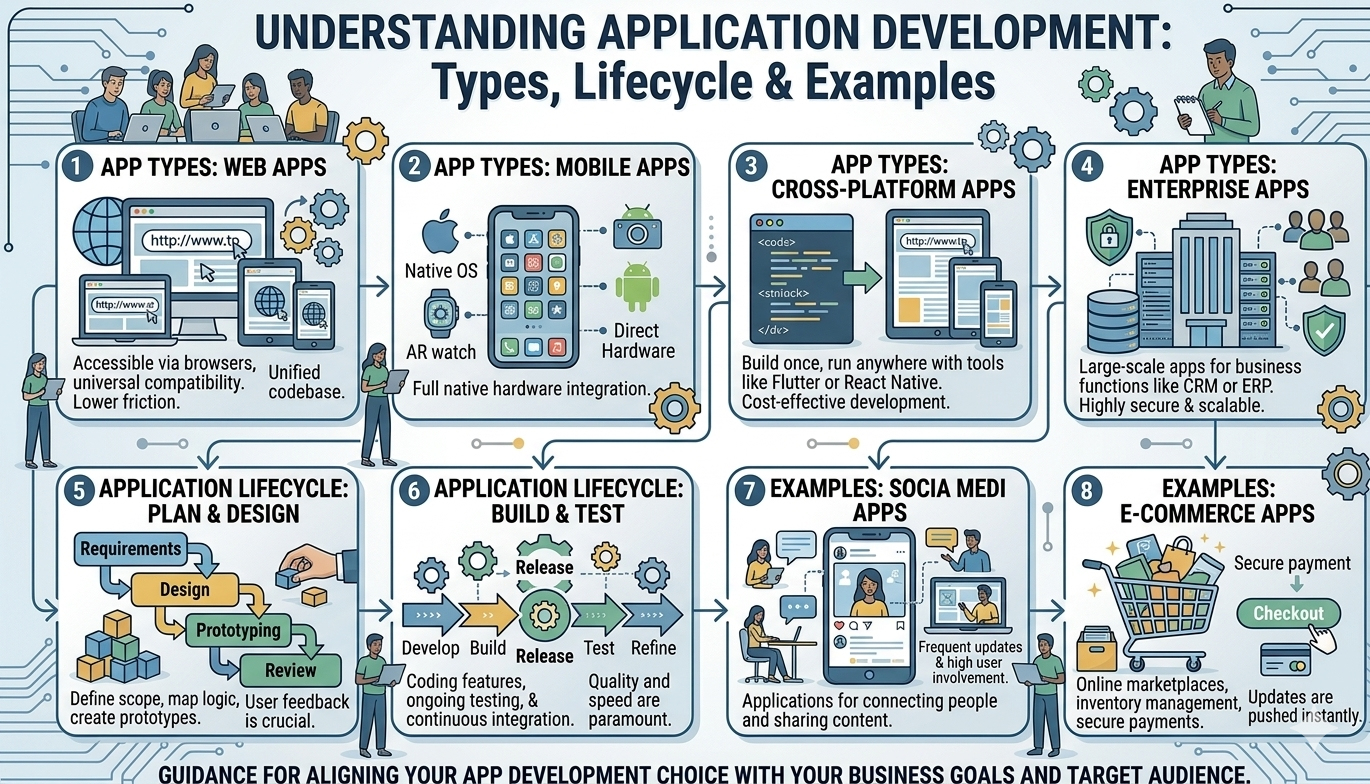
Common Mistakes in Application Development Projects
 Althaf Mohamed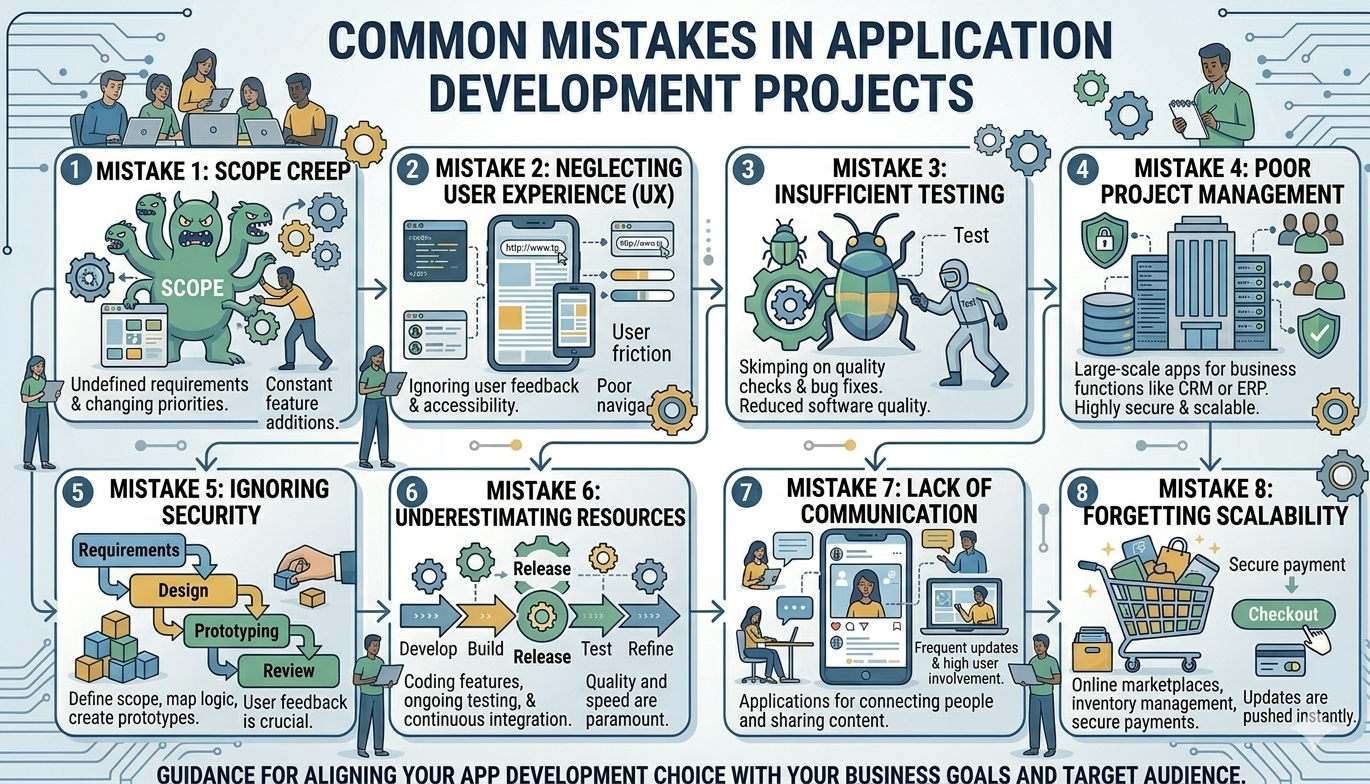
Application development projects can fail even when the idea is excellent, and the development team is highly skilled. Many organizations invest significant time and money into building web applications, mobile apps, and enterprise software, only to face missed deadlines, budget overruns, security issues, and poor user adoption.
Understanding the most common mistakes in application development projects is critical to delivering successful software. Teams may reduce risk, increase quality, and ensure that the final product satisfies both business goals and user expectations by identifying these problems early on and following tried-and-true best practices.
Here, these are the most common mistakes in application development and how to avoid them.
Scope Creep
Scope creep occurs when new features are continuously added to a project without adjusting the timeline or budget. This often results in a "bloated" product that is never truly finished. And also, a simple application can quickly become overwhelmed with additional features, resulting in delays and higher expenses. And also, it happens requirements are not clearly defined, stakeholders keep requesting additional features and there is no formal change management process.
The solution is to clearly define and adhere to a Minimum Viable Product (MVP) that includes only the most essential features needed for launch. Any additional ideas manage fresh concepts as part of a "Phase 2" backlog.
Neglecting User Experience (UX)
Many developers focus so much on the "back-end" logic over user experience that they forget about the person actually using the app. An app that is functionally or technically perfect but difficult to navigate will fail. And also, poor design can lead to frustration, low engagement, and negative reviews.
The Solution is during the prototyping stage, conduct usability testing with actual users and involve UI/UX designers early on. It's use full for improve the customer satisfaction and higher retention rates, better conversion rates as well.
Insufficient Testing
Skipping or rushing the testing phase to meet a deadline is a recipe for disaster. Bugs found after launch are significantly more expensive to fixing issues and can permanently damage your brands or company reputation.
The solution is to use "Continuous Integration" (CI) and automated testing, including unit, integration, user acceptance, security testing. Never release a build that hasn't been through a rigorous Quality Assurance (QA) cycle.
Poor Project Management
Without a structured methodology (like Agile or Scrum), communication breaks down. Team members become unsure of their priorities, leading to duplicated work or missed dependencies.
The solution is using project management tools (like Jira, Trello, Asana) it will help teams manage tasks and track progress effectively and hold daily stand-up meetings to ensure everyone is aligned and obstacles are identified quickly.
Ignoring Security
One of the most dangerous mistakes is treating security as an afterthought. One vulnerability might cost in legal issues and a decline in customer trust in a world where data breaches occur frequently.
The solution is to adhere to "Security by Design" principles. Use encryption, secure APIs, and Implement authentication and perform regular penetration testing throughout the lifecycle. And also, security should be considered throughout the entire software development lifecycle.
Underestimating Resources
Many projects fail because the initial estimate for time, money, or talent was too optimistic. Developing a high-quality app often takes longer and costs more than expected.
The solution is making accurate estimates by utilizing previous data from earlier projects and consult experienced developers. Always factor in a buffer (typically 15–20%) for unforeseen technical issues.
Lack of Communication
The final product often fails to meet the business goal when stakeholders (business owners) and developers don't speak the same language.
The solution is ensuring that there is a dedicated Product Owner who can convert business needs into technical tasks and maintain communication with all stakeholders. It's helps to regular sprint reviews and progress reports help keep expectations aligned.
Forgetting Scalability
Building an app that performs well for a small number of users may fail under increased demand (works for 100 users but crashes at 10,000) is a common mistake for growing startups. Using rigid architectures makes it nearly impossible to upgrade later.
The solution was using cloud-based infrastructure (like AWS or Azure or Google Cloud Platform) and microservices architecture, load balancing, and database optimization to ensure the app can grow with your user base.
Application development projects involve far more than writing code. Clear planning, Success depends on clear planning, effective communication, rigorous testing, strong security practices, and a focus on user experience. Mistakes such as scope creep, poor project management, inadequate testing, and ignoring scalability can derail even the most promising software projects.
Avoiding these mistakes requires discipline, clear communication, and a willingness to prioritize quality over speed. Early detection of these warning signs will help you keep your application development project on the path to a successful launch.
Understanding these common mistakes and applying the solutions indicated above will enable businesses and development teams to deliver high-quality apps on time and under budget. Prioritizing quality, collaboration, and long-term thinking is essential for developing software that not only launches successfully but also performs and grows in response to user expectations.
Frequently Asked Questions
Althaf Mohamed
Technical Author
Software Engineer and technical author specializing in web architectures, databases, and secure distributed systems.
Trending Now
Recent Posts

Beginner's Guide to Software Development: Everything You Need to Know in 2026
May 30, 2026
TypeScript vs JavaScript - Key Differences
May 04, 2026
API Status Codes & Meanings
May 04, 2026
What is an Application Programming Interface (API)
May 04, 2026
Network Security Basics – Threats & Protection Methods
May 04, 2026.png?alt=media&token=11b33f62-1df1-4701-bcac-47fb77241c5e)