Key Principles of Database Design
 Althaf Mohamed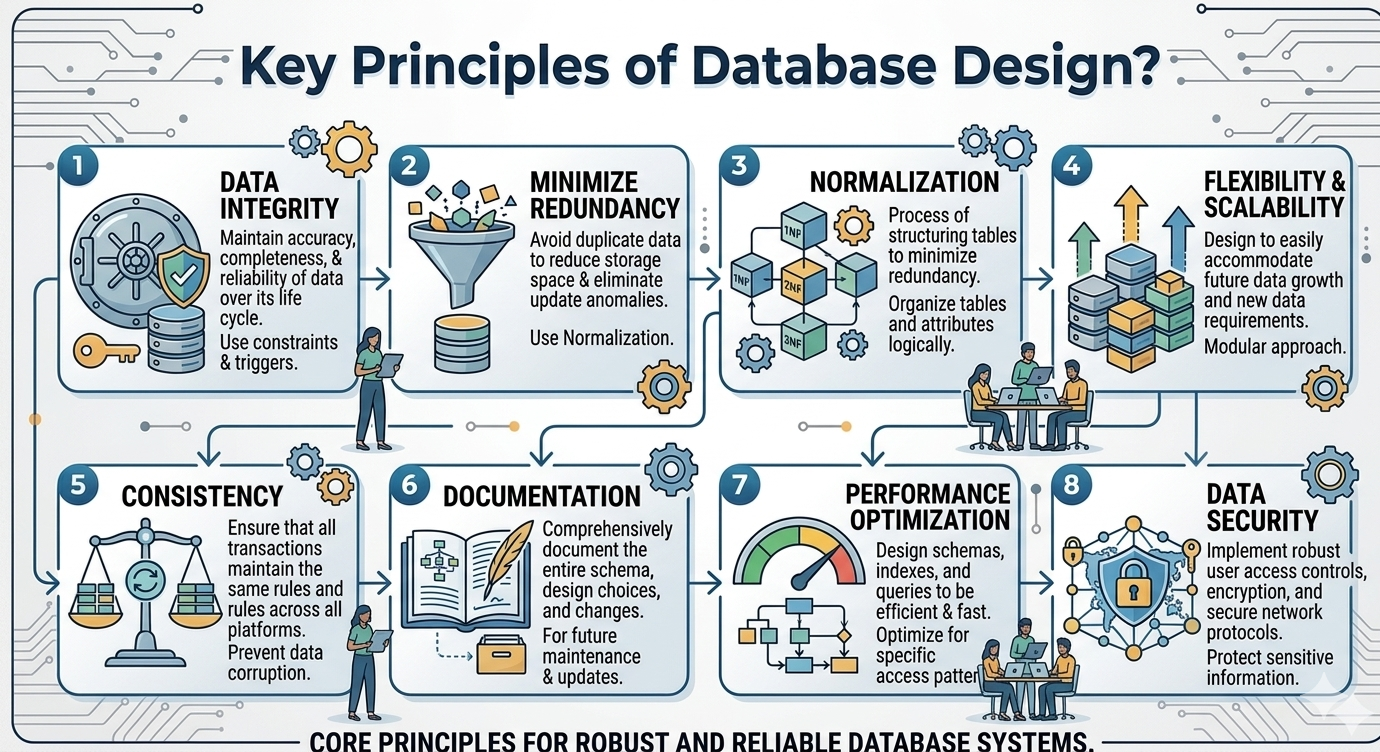
Database design is a critical step in building any software application. A well-designed database ensures that data is stored efficiently, accessible quickly, and managed easily. Poor design, on the other side, may result in data inconsistency, slow performance, and scalability concerns.
The key principles of database design give a set of standards for properly structuring data, maintaining integrity, and supporting future growth. By following these principles, developers can build reliable, scalable, and high-performing systems.
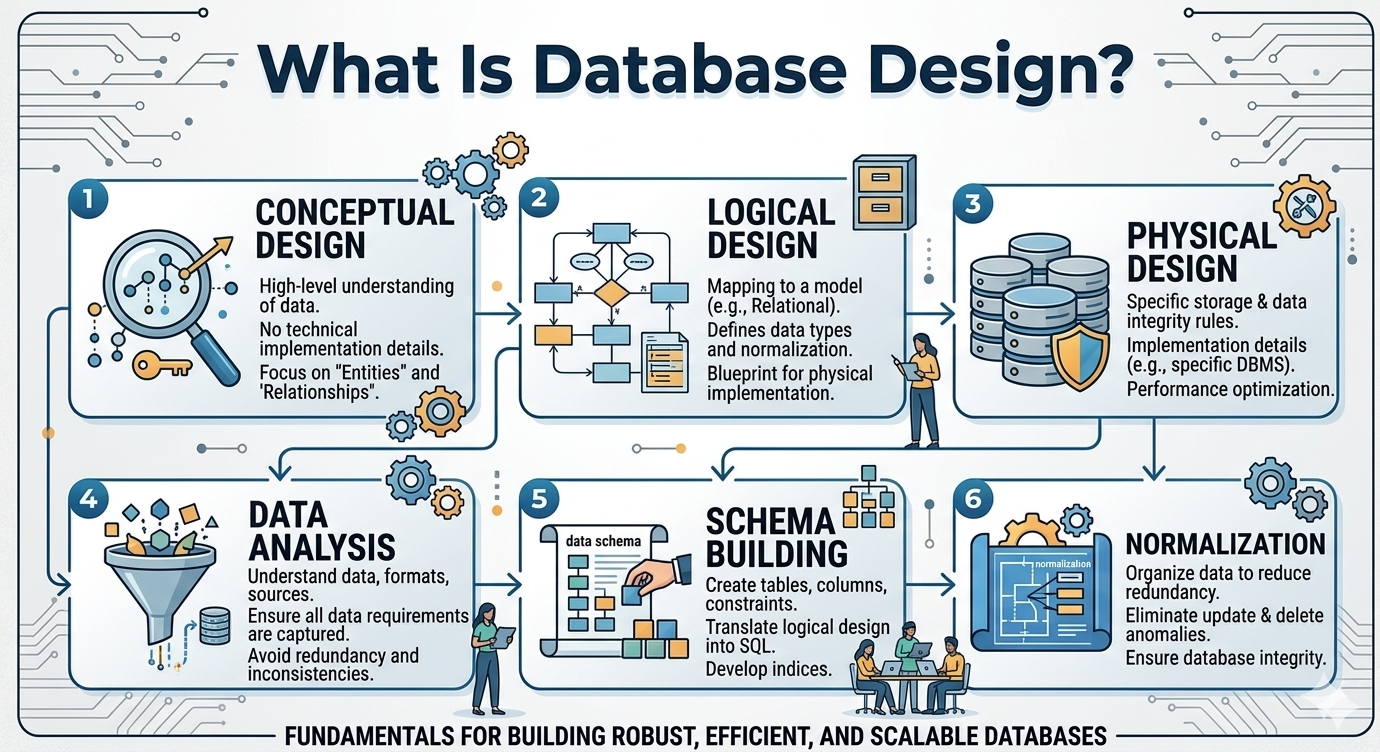
Database design is the process of organizing data in tables, defining relationships, and enforcing rules to assure data accuracy and efficiency. The goal is to design a system that is simple to maintain, scalable, and performance optimized.
A good database design ensures:
Data consistency and integrity
Fast data retrieval
Reduced redundancy
Easy maintenance and scalability
Key Principles of Database Design
Understand Requirements Clearly
Before building a database, it is critical to understand the business needs and the type of data involved. This includes determining what data should be stored, how it will be utilized, and who will have access to it.
A clear understanding of requirements is the foundation of a good database design and influences all subsequent decisions.
Data Integrity and Consistency
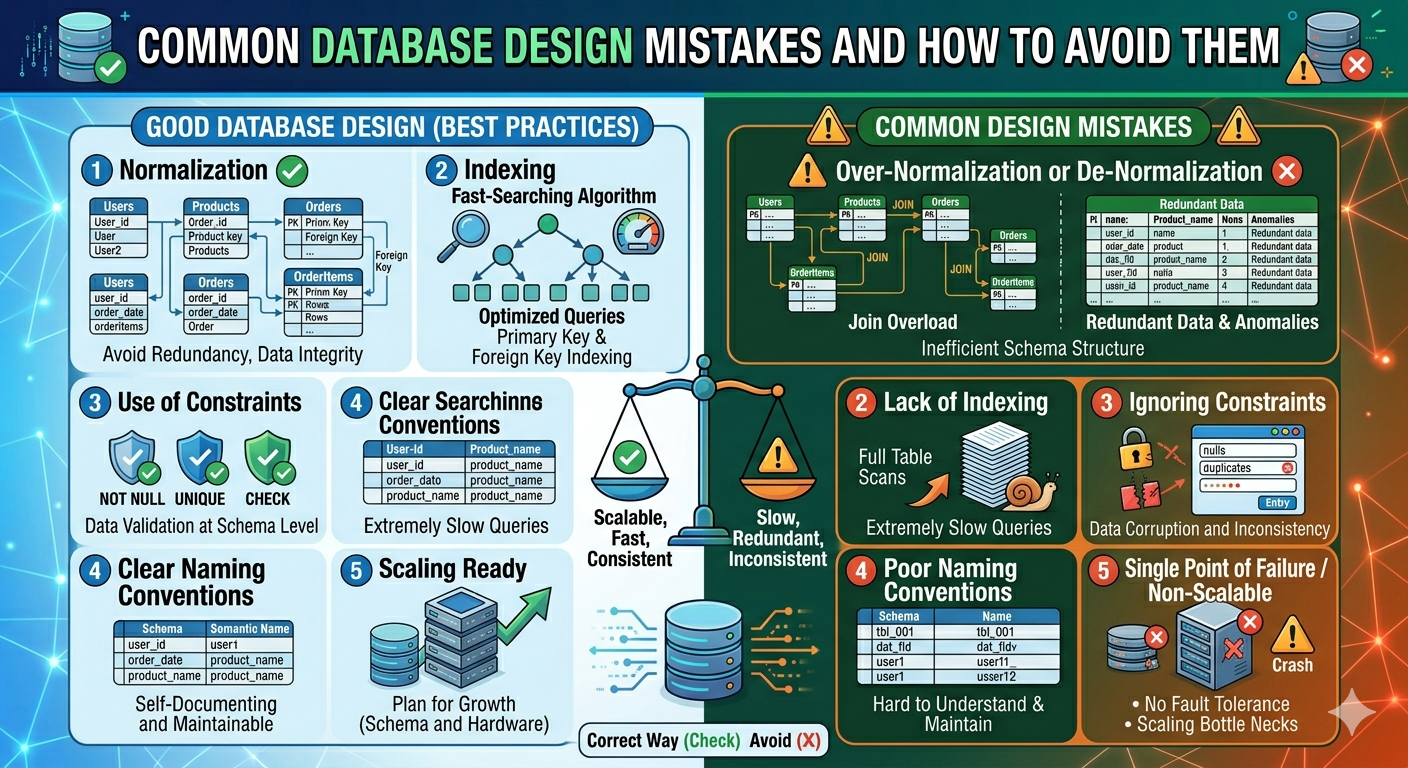
Data integrity ensures that the data stored in the database is accurate, consistent, and reliable. This is achieved by the enforcement of rules such as constraints, validations, and relationships between tables.
Primary keys, foreign keys, and constraints all help to data consistency and the prevention of invalid or duplicate entries.
Normalization (Avoid Redundancy)
Normalization is the process of structuring data to reduce redundancy and dependency. It ensures that each piece of data is only saved once, reducing duplication and inconsistency.
Normalization improves data accuracy and makes changes easier by dividing it into multiple related tables.
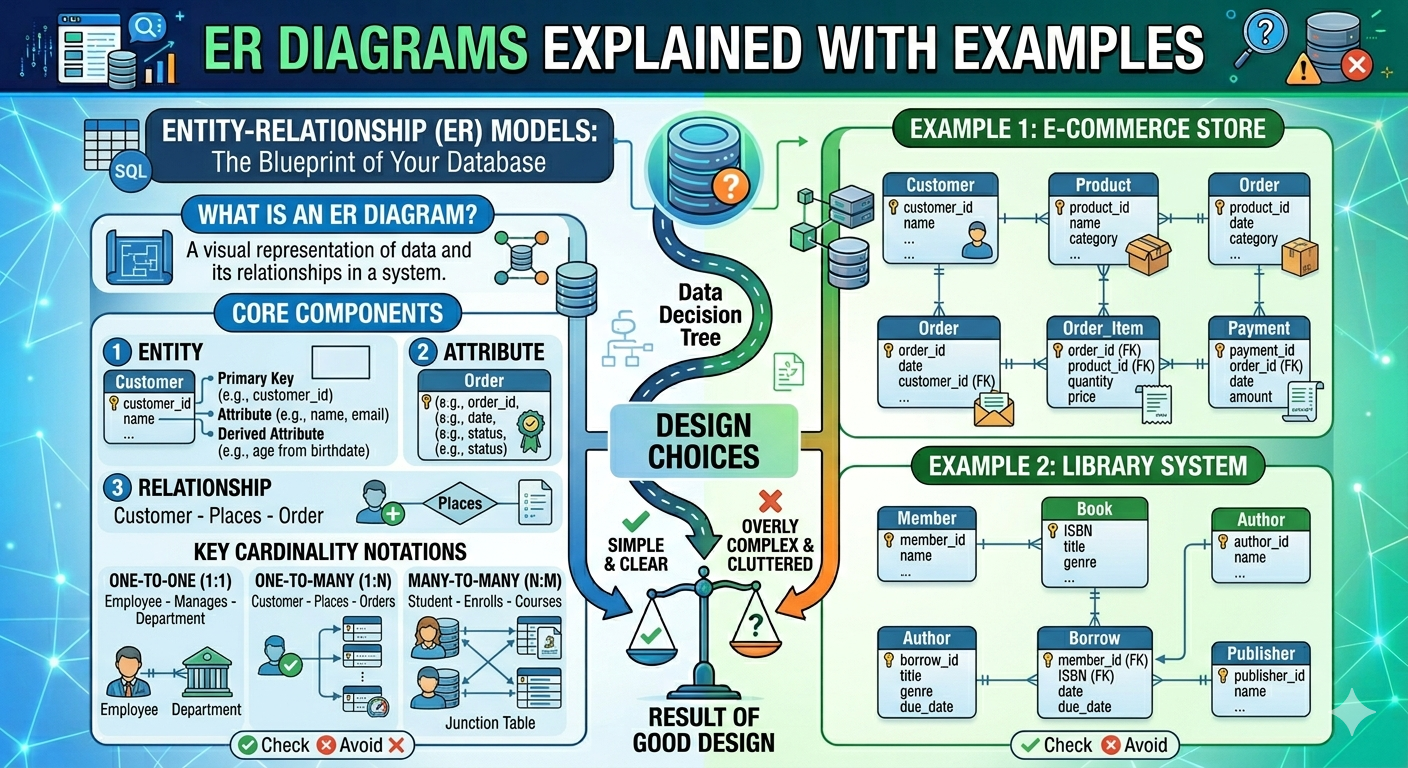
Define Clear Relationships
A well-designed database clearly defines relationships between tables using keys.
One-to-One: One record in a table is linked to only one record in another table.
One-to-Many: One record in a table can be linked to multiple records in another table.
Many-to-Many: Multiple records in one table can be linked to multiple records in another table.
Using relationships ensures that data is logically connected and avoids duplication.
Use Proper Keys and Indexing
Keys play a crucial role in database design:
Primary Key: Uniquely identifies each record
Foreign Key: Links tables together
Indexing enhances query performance by speeding up data retrieval, especially for large datasets.
Ensure Data Atomicity
Each field in a table should only have one value (atomic value). This reduces complexity and improves data consistency.
For example, instead of storing multiple phone numbers in the one field, divide them into rows or tables.
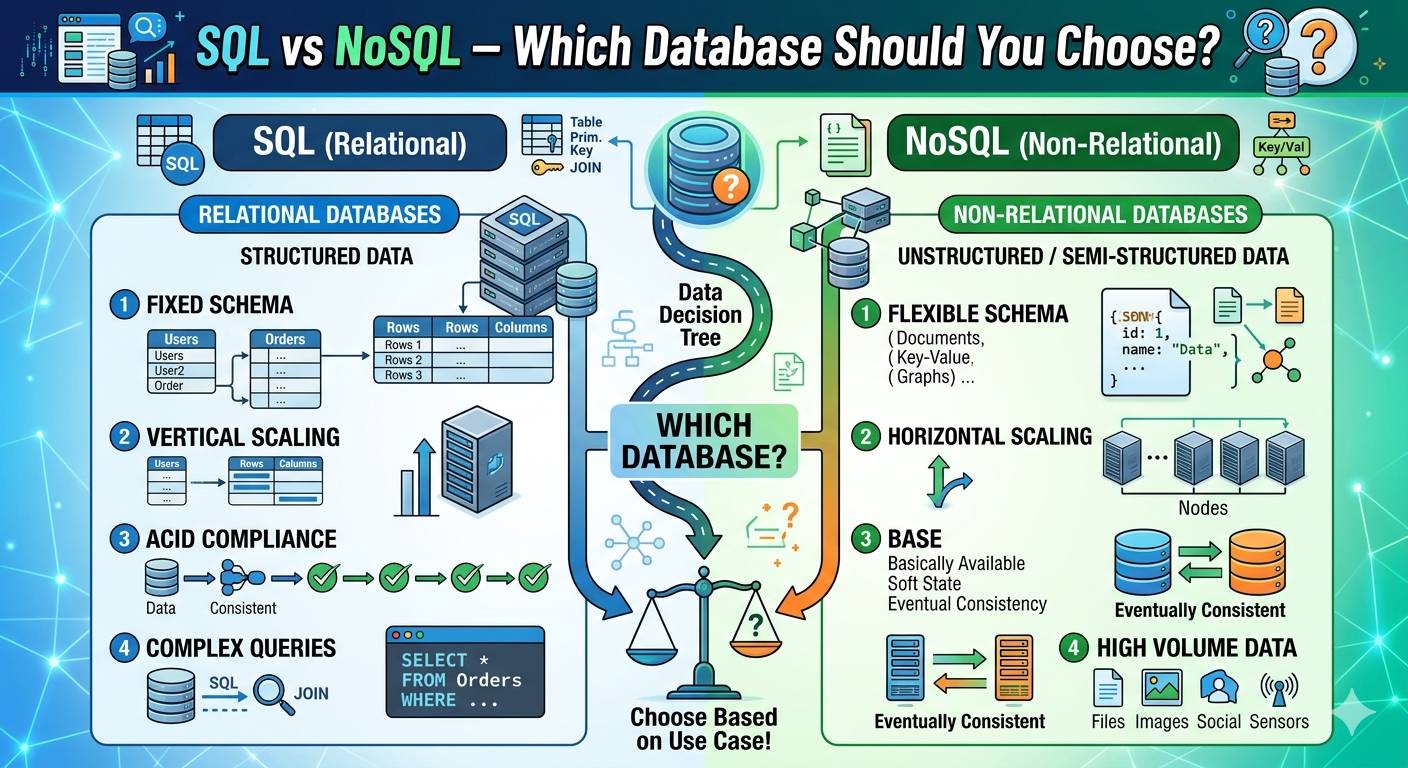
Scalability and Performance
A good database design should be able to handle growth in data and users. This involves planning for:
Increased data volume.
More concurrent users.
Faster query performance
Indexing, partitioning, and caching are all techniques that help improve scalability and performance.
Simplicity and Clarity
The database structure should be simple and understandable. Complex designs are more difficult to maintain and prone to errors.
Clear naming conventions and well-organized tables make the database easier to manage and update.
Security and Data Protection
Database design should include security mechanisms such as:
Access control
Data Encryption
Backups happen on a regular basis.
Protecting data provides privacy and avoids unauthorized access.
Flexibility and Maintainability
A good database should be flexible enough to future changes without requiring extensive redesign. This includes implementing new features, updating data structures, and scaling the system.
A maintained database reduces long-term costs and development effort.
Database design is the backbone of any data-driven application. Normalization, data integrity, proper relationships, and scalability are fundamental principles that developers can use to build efficient and reliable systems.
A well-designed database not only boosts performance but also ensures long-term success and adaptability in a continuously changing digital world.
Frequently Asked Questions
Althaf Mohamed
Technical Author
Software Engineer and technical author specializing in web architectures, databases, and secure distributed systems.
Trending Now



Recent Posts

Beginner's Guide to Software Development: Everything You Need to Know in 2026
May 30, 2026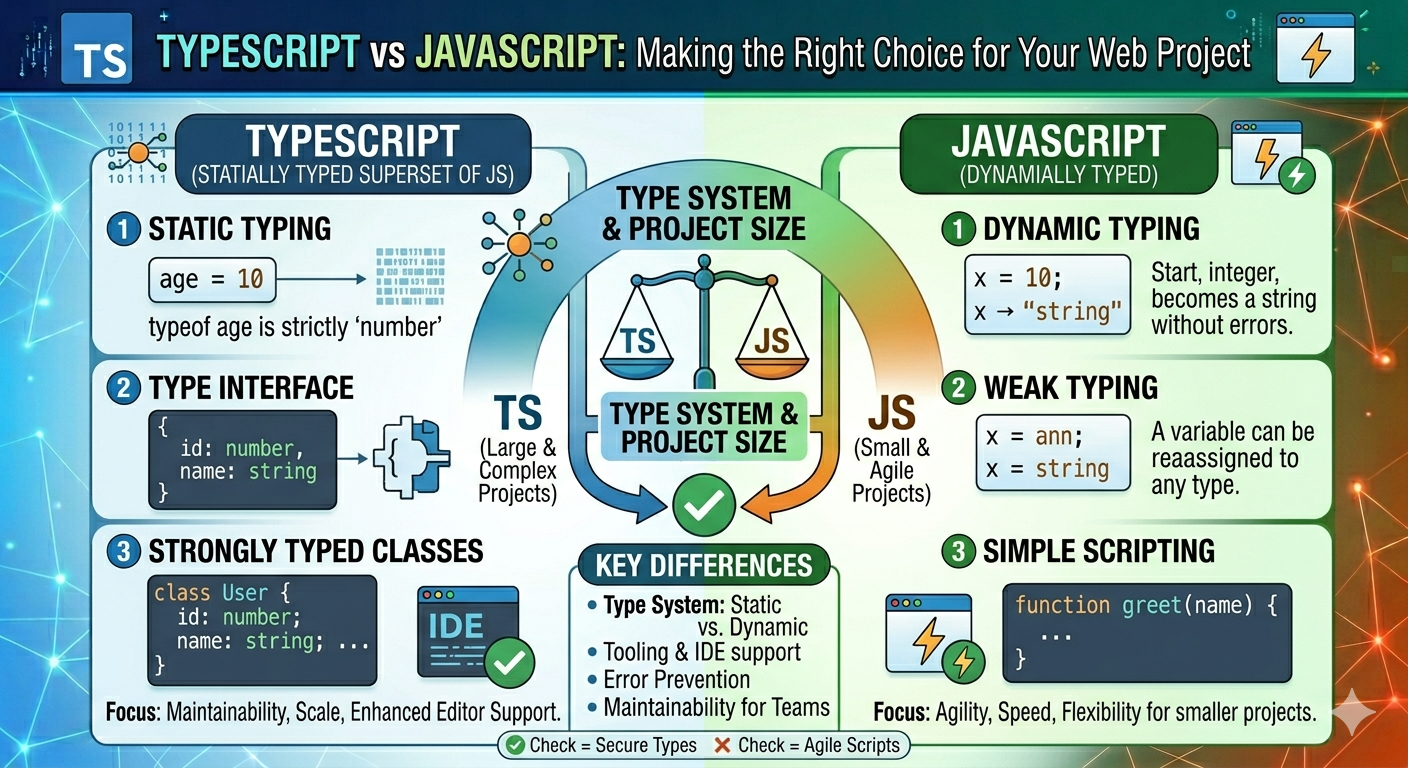
TypeScript vs JavaScript - Key Differences
May 04, 2026
API Status Codes & Meanings
May 04, 2026
What is an Application Programming Interface (API)
May 04, 2026
Network Security Basics – Threats & Protection Methods
May 04, 2026