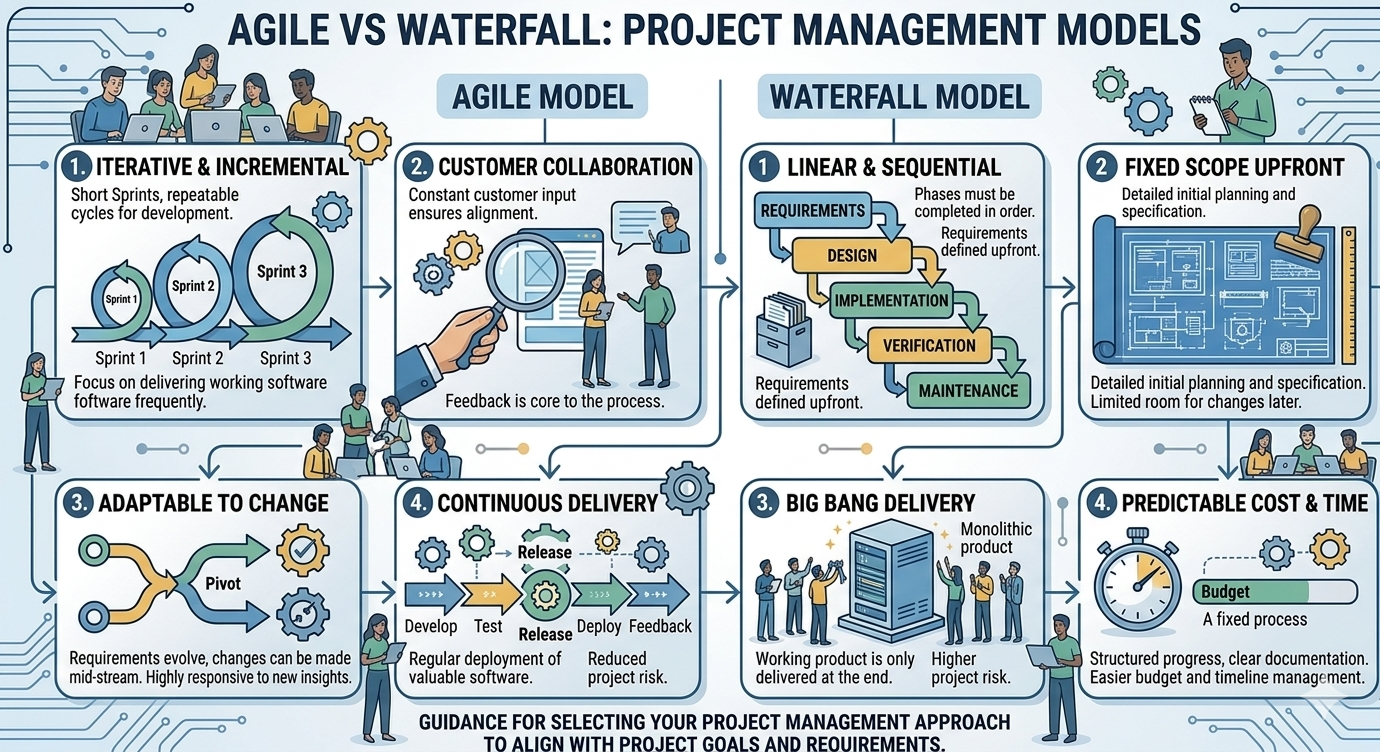
SDLC Explained with Real-World Examples
 Althaf Mohamed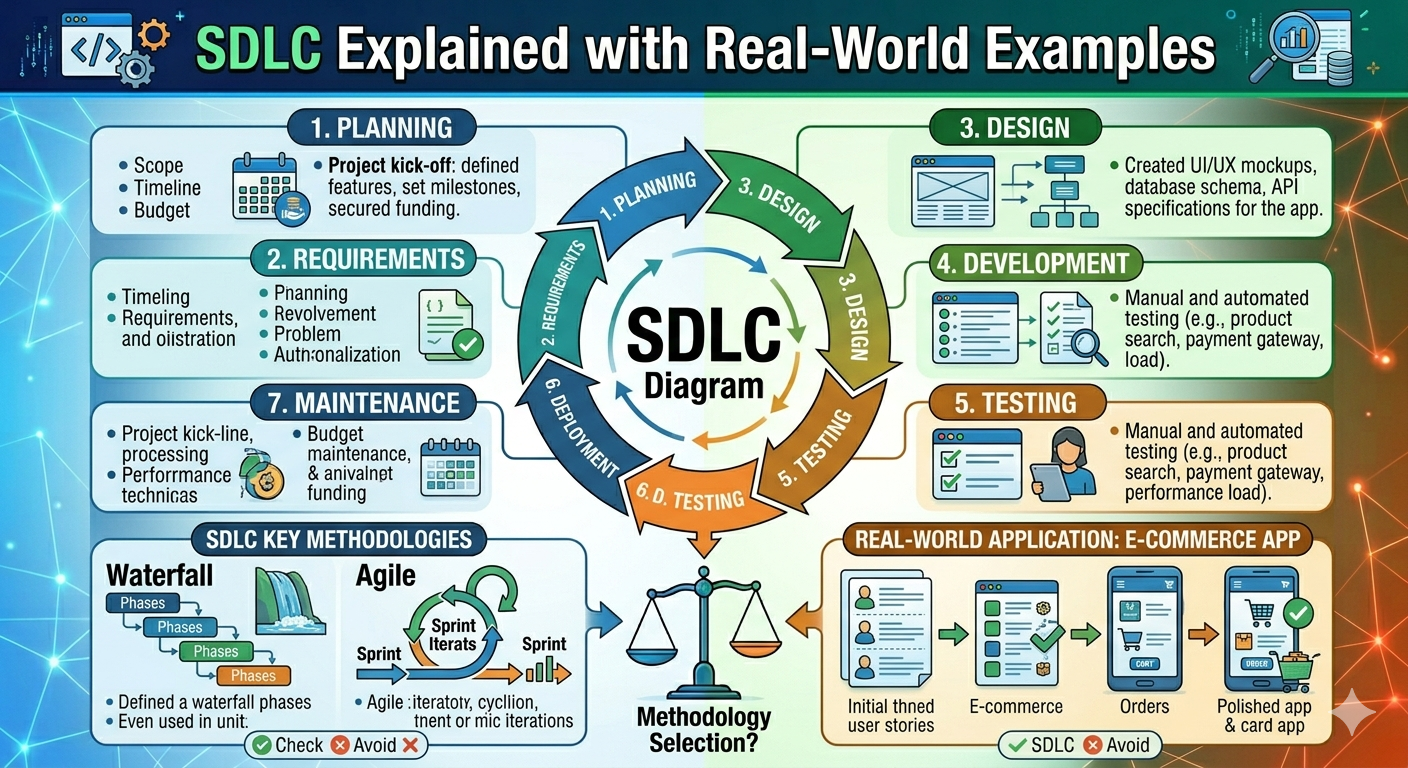
Building high-quality software is not just about writing code it requires a structured method to assure reliability, scalability, and security. Here's where the Software Development Life Cycle (SDLC) kicks in.
SDLC provides a step-by-step structure to help developers get from idea to deployment and beyond. Whether you're creating a basic website or a complex enterprise system, using SDLC helps to get better results with fewer errors.
What Is SDLC?
The Software Development Life Cycle (SDLC) is a structured approach used by developers to design, develop, test, and deploy software systems. It gives a step-by-step approach for teams to build software in an orderly, efficient, and reliable way.
Instead of developing software at random, SDLC ensures that each stage—from planning to maintenance—is appropriately managed and carried out. This systematic methodology helps teams develop high-quality applications that fulfill user needs and business goals.
Why SDLC Is Important
High-quality software: Each process includes validation and testing, which reduces errors and improves reliability.
Reduced development risks: Effective planning and analysis help in the early detection of possible risks.
Better project management: Clear phases and documentation facilitate progress tracking and team management.
Improved customer satisfaction: Providing a stable, well-tested product leads to a better user experience.
Phases of SDLC
Planning & Requirement Analysis
This is the first and most important phase is crucial for defining project goals and requirements. Key activities include understanding user needs, defining the project scope, and conducting a feasibility study. For example, when a company plans to create an e-commerce website, it identifies essential features such as product listings, a shopping cart, a payment system, and user accounts. Additionally, analyzing target users (including customers and admins) along with assessing budget and timeline requirements is vital.
System Design
In this phase, the system architecture and design are created according to the identified requirements. The main activities include UI/UX design, database design, and system architecture planning. This includes creating the visual layout of the e-commerce website (UI) and structuring the database to effectively store information about products, users, and orders. Finally, this phase produces a complete blueprint that leads the development process.
Development (Implementation)
This is where actual coding happens. Developers build the application based on the design. Developers engage in several key activities such as writing code, creating modules, and conducting unit testing. The e-commerce applications development process includes the frontend elements like product pages and cart user interfaces, while the backend focuses on APIs for user interactions, order processing, and payment handling. The database structure consists of tables and relationships, with each feature being developed incrementally and subjected to unit tests to ensure functionality.
Testing
Before being released, the application goes through several tests to identify and rectify bugs. Functional, performance, and security testing are all important activities. In e-commerce side conduct the specific testing focuses on verifying that customers can add items to the cart, that payments are processed correctly, and that the website can handle several users at once.
Deployment
After the successful completion of testing, the application becomes accessible to users. Key activities involved in this process include hosting the application on servers, transitioning it to a production environment, and closely monitoring its initial performance. For instance, consider the launch of an e-commerce website, which, once tested, is made available for customers to access online.
Maintenance
After deployment, the application undergoes ongoing updates and enhancements. Key activities involved in this process include fixing bugs, adding new features, and improving performance. For instance, in the context of an e-commerce website, new features may encompass the implementation of discount coupons, the introduction of a Wishlist feature, and the development of a mobile app version.
Popular SDLC Models
Different projects require different approaches, so there are several SDLC models used in software development.
Waterfall Model
The Waterfall model is a linear and sequential approach where each phase must be completed before moving to the next. Here key features are simple and easy to understand, fixed requirements at the beginning, no overlap between phases. This method is best for small projects and projects with well-defined requirements as well.
Agile Model
The Agile model is an iterative and flexible approach where development is done in small cycles called sprints. Here key features are continuous feedback, frequent updates and releases, flexible to changes. This method is best for startup applications where requirements change frequently and fast changing environments projects and dynamic projects as well.
Spiral Model
The Spiral model combines iterative development with risk analysis. It focuses heavily on identifying and reducing risks. Here key features are risk management at every stage, iterative process. This method mainly used in large enterprise systems where risks must be carefully managed. This method is suitable for complex projects and high-risk projects as well.
DevOps Model
The DevOps model combines development and operations to enable continuous integration and deployment. Here key features are automation of testing and deployment, continuous delivery, faster releases. This method mainly used by companies like Netflix for continuous updates and deployment. This is best for cloud-based applications, continuous delivery environments as well.
Each SDLC model has its own strengths and is suitable for different types of projects. Choosing the right model depends on factors like project size, complexity, budget, and flexibility requirements.
Frequently Asked Questions
Althaf Mohamed
Technical Author
Software Engineer and technical author specializing in web architectures, databases, and secure distributed systems.
Trending Now
Recent Posts
Beginner's Guide to Software Development: Everything You Need to Know in 2026
May 30, 2026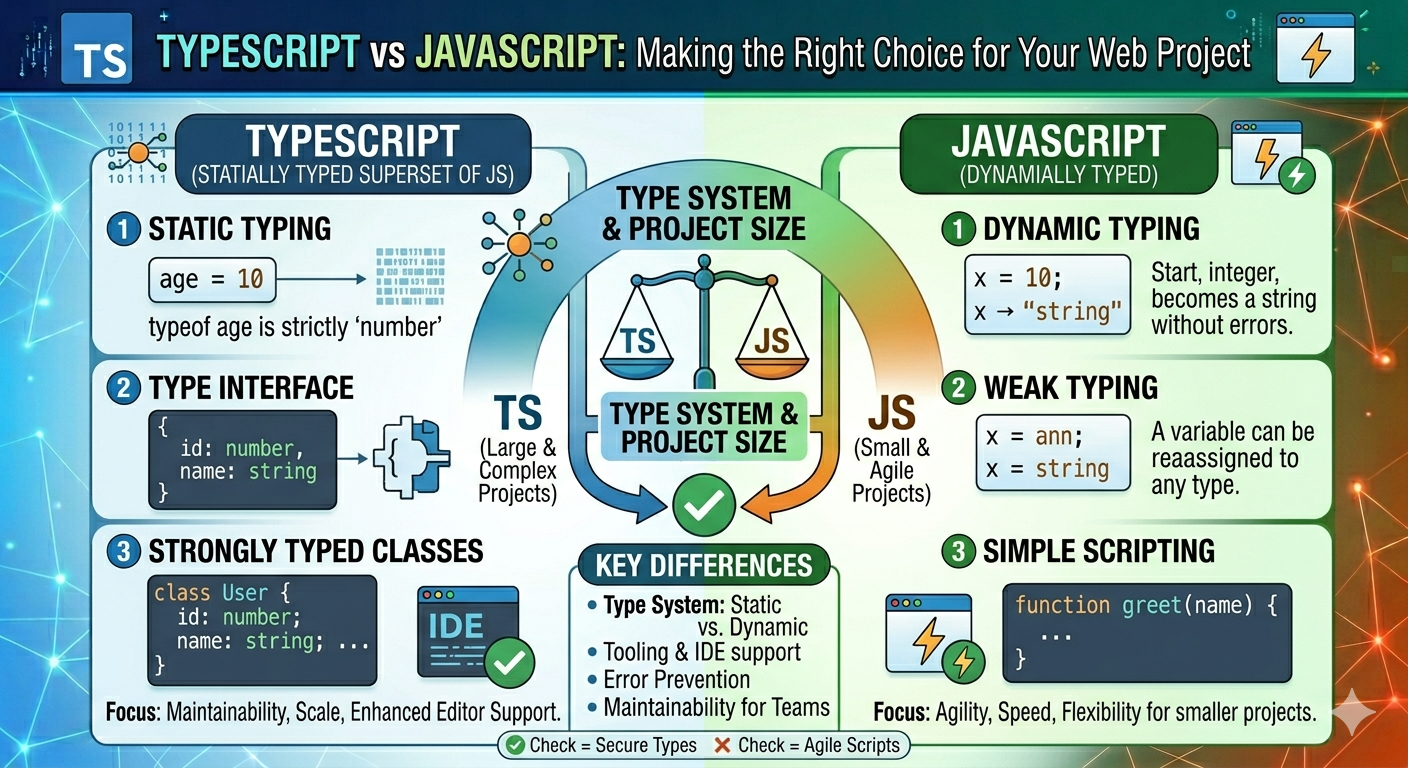
TypeScript vs JavaScript - Key Differences
May 04, 2026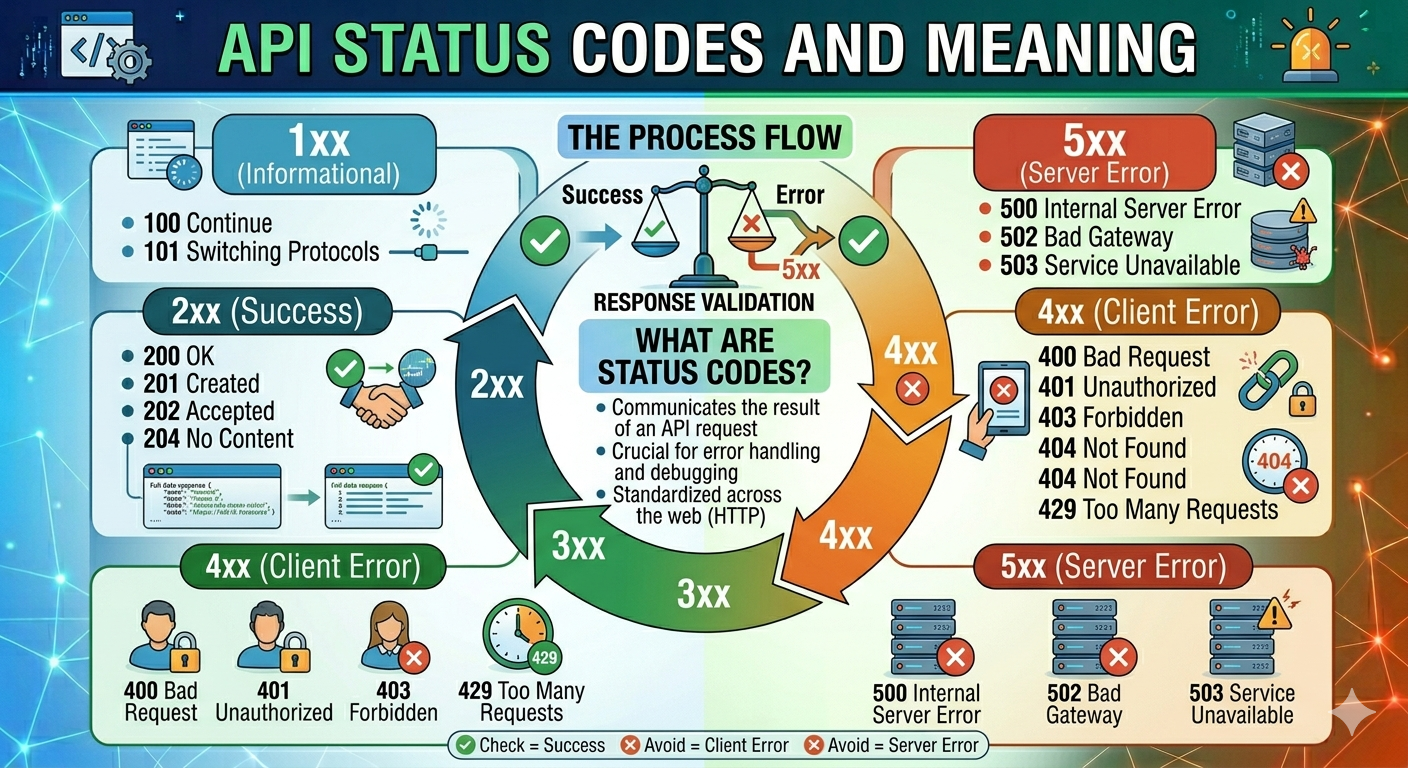
API Status Codes & Meanings
May 04, 2026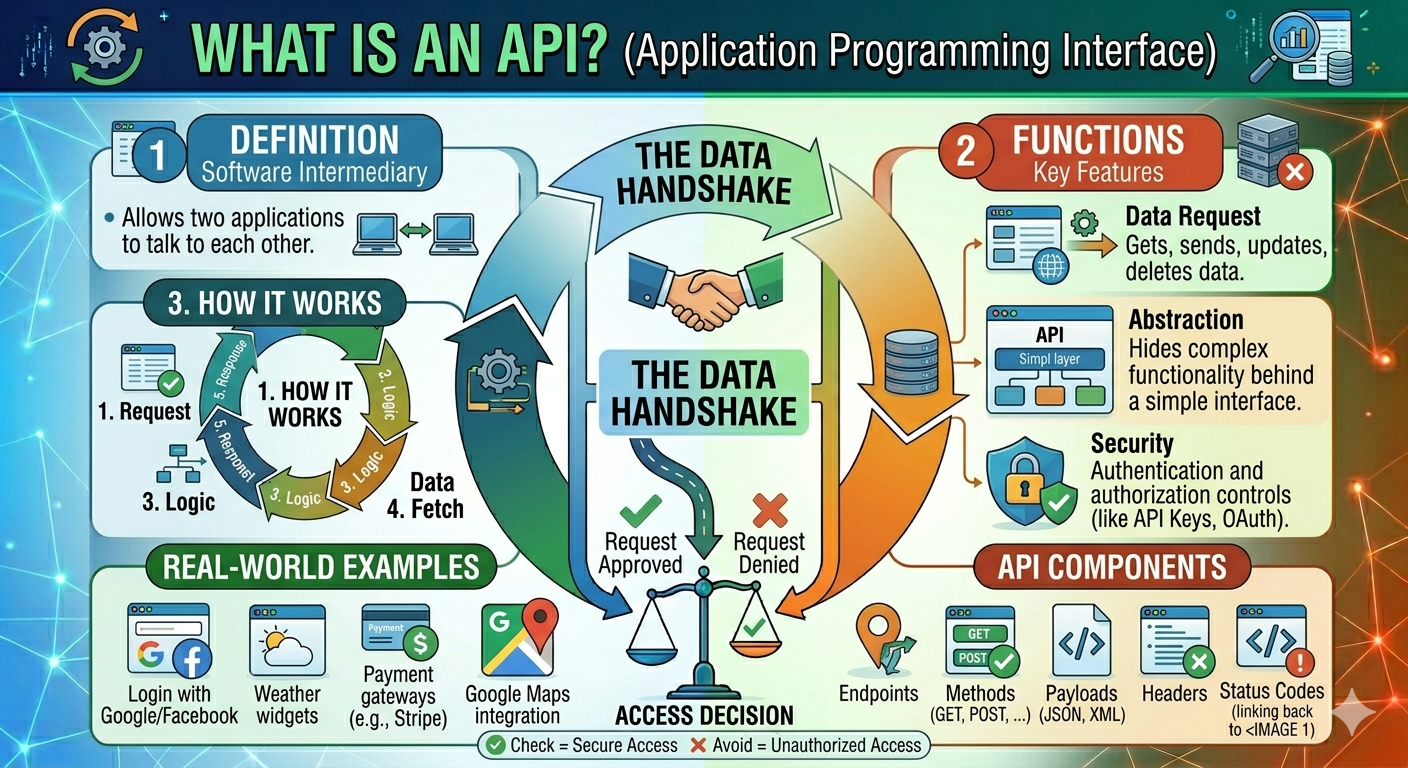
What is an Application Programming Interface (API)
May 04, 2026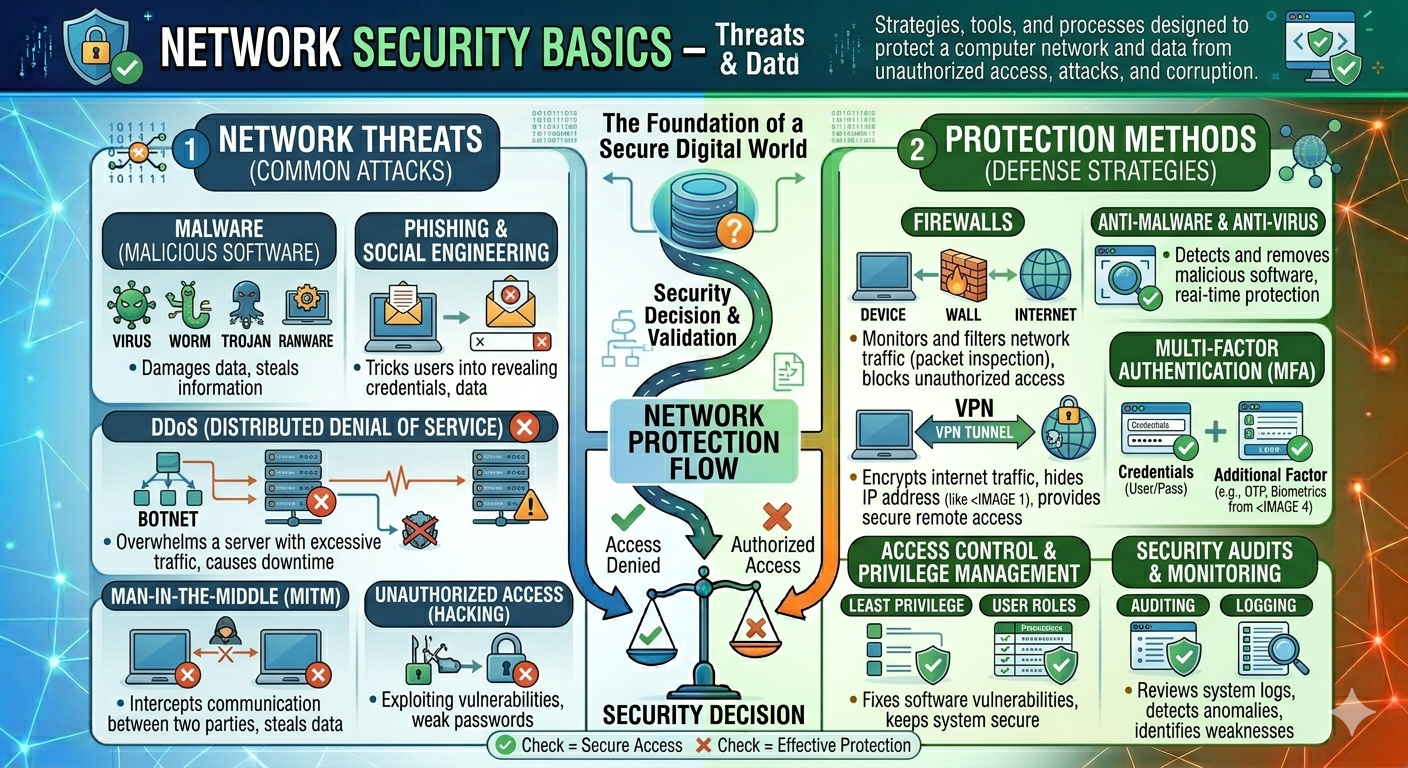
Network Security Basics – Threats & Protection Methods
May 04, 2026