What is Algorithm
 Althaf Mohamed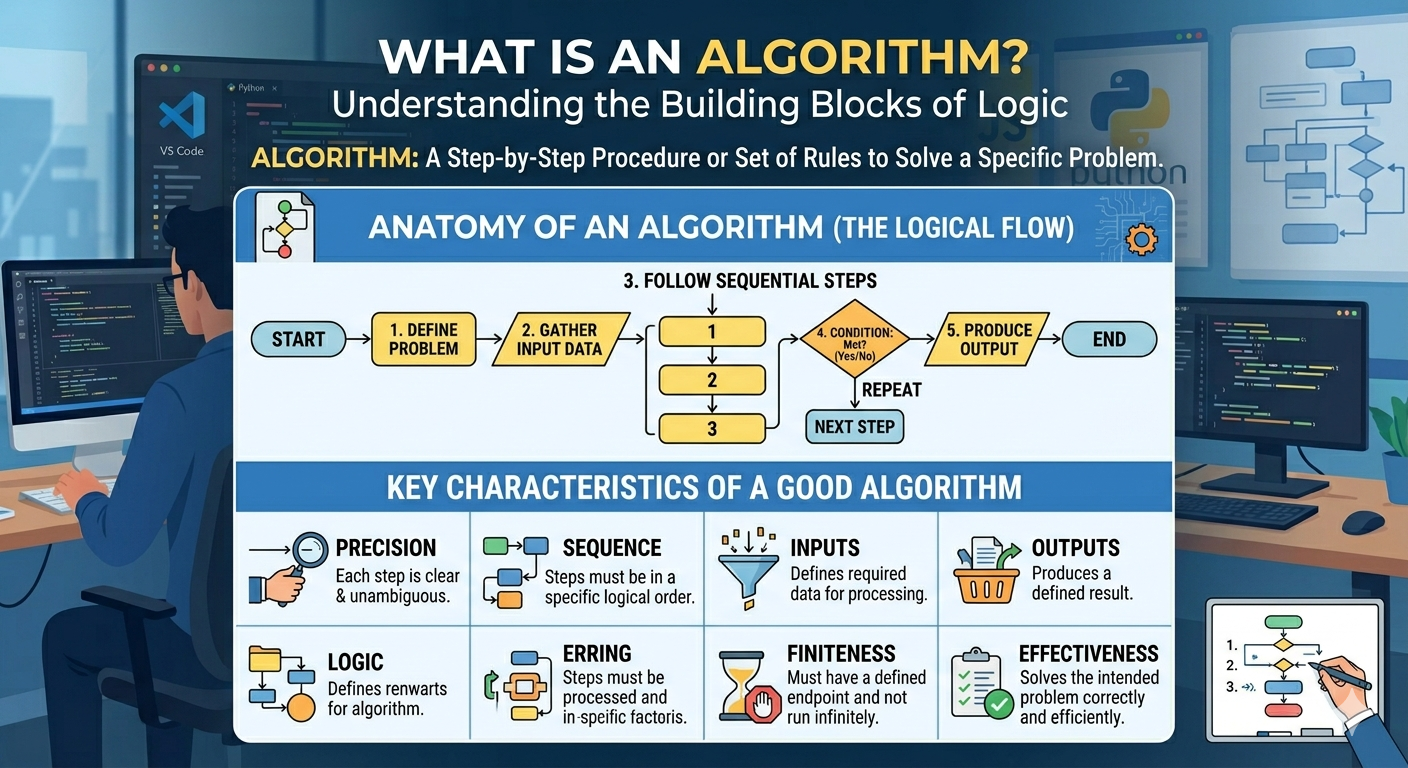
An algorithm is a procedure used for solving a problem or performing a computation. In either hardware-based or software-based routines, algorithms function as a detailed sequence of instructions that carry out predetermined operations sequentially.
All aspects of information technology employ algorithms extensively. A simple technique that resolves a recurring issue is typically referred to as an algorithm in mathematics and computer science. Algorithms are essential to automated systems because they serve as specifications for processing data. Natural languages, programming languages, pseudocode, flowcharts, and control tables can all be used to express algorithms. Expressions in natural languages are uncommon because they are more unclear. A computer’s algorithms are typically expressed in programming languages.
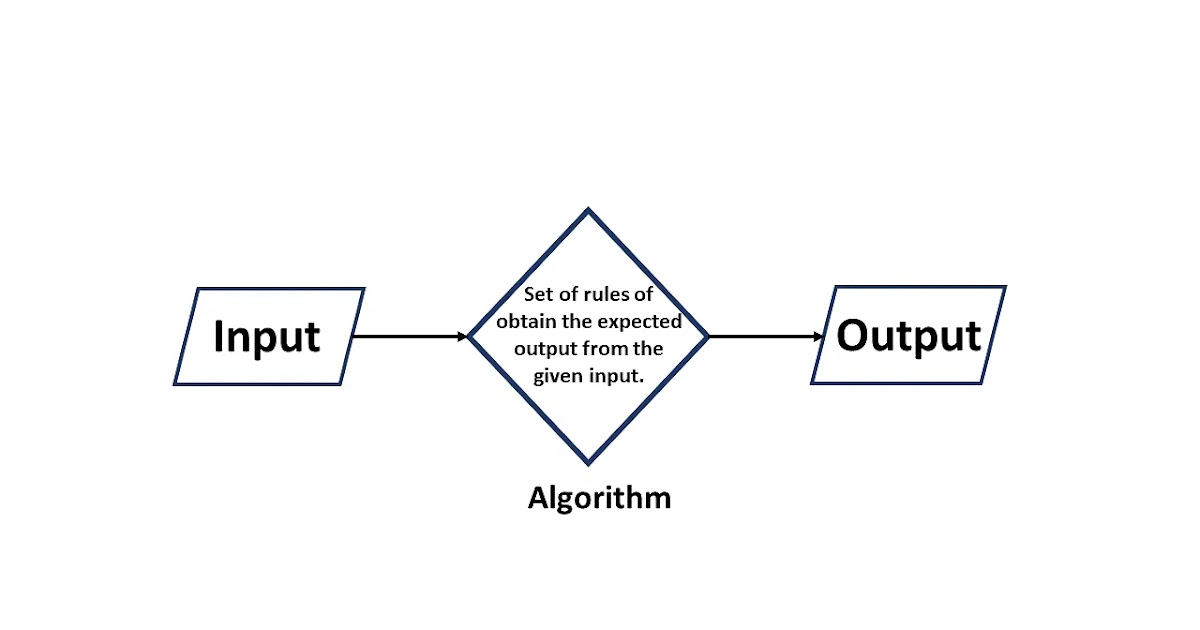
Characters of Algorithm
Input
The data that must be transformed in order to produce the output are the input. An algorithm should contain 0 or more inputs that are well described. For input to be precise, you must be aware of the kind, quantity, and format of the data.
Output
The results of the computation are the data (your intended result). An algorithm should produce at least one output that is clearly specified and matches the desired output. Additionally, output accuracy necessitates knowledge of the kind, quantity, and format of the output.
Definiteness
Every step and the order in which those actions must be performed must be specified in algorithms. Defining the process flow for converting input to output is the definition of definitiveness. The algorithm should be unambiguous and clear. Each step’s specifics must be described in detail (including how to handle errors). Everything in it should be quantitative, not qualitative.
Effectiveness
An algorithm must be able to complete all of its essential stages and reach its desired result in order for it to be effective. It shouldn’t have any extraneous or redundant steps that could render the algorithm useless.
Finiteness
At some point, the algorithm must stop. Stopping could result in either getting the desired result or a response that no solution is conceivable. An algorithm must end after a predetermined number of steps. An algorithm shouldn’t run on forever and should always end after a set number of steps.
The creation of an infinite algorithm is pointless because it will serve no purpose for us.
Independent
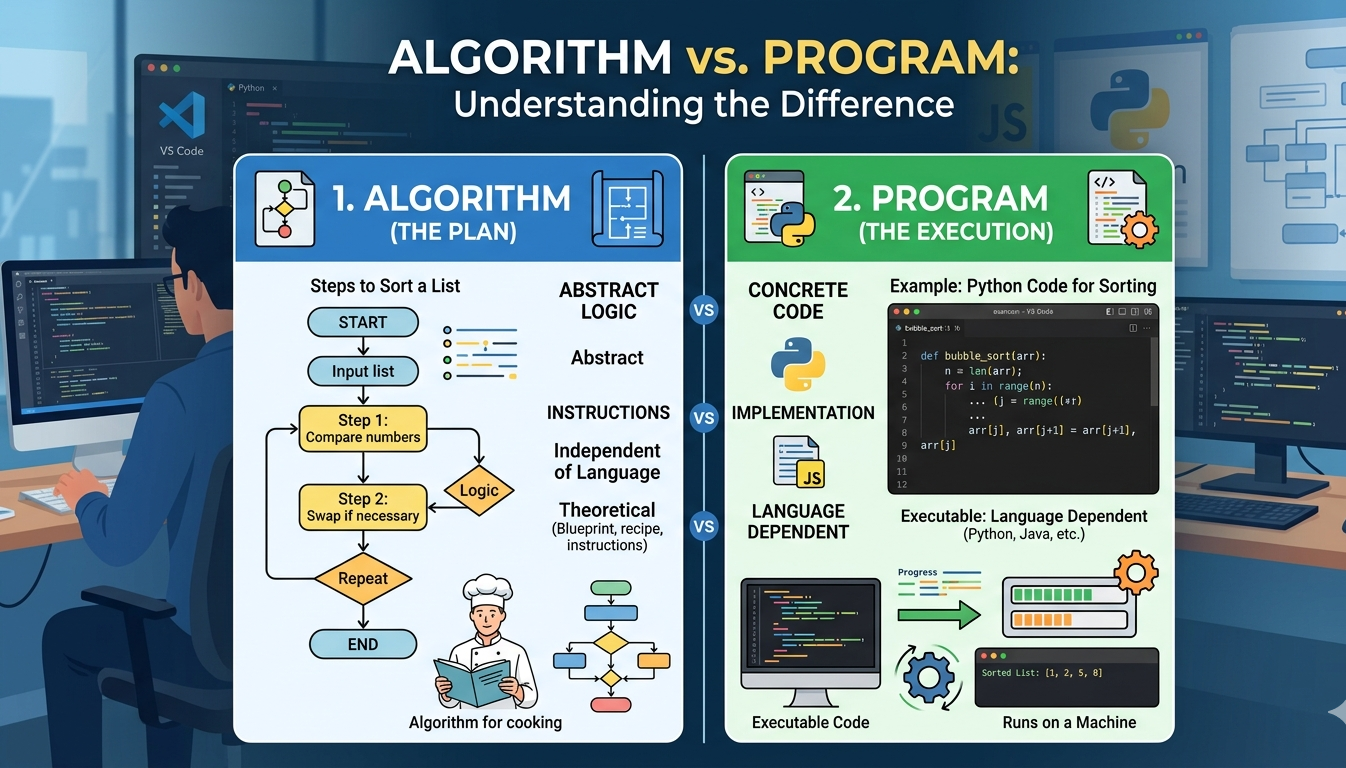
An algorithm should have detailed instructions that are unrelated to any programming code. It should be designed so that it may be used with any programming language.
These qualities are therefore necessary for an algorithm to be successful.
Why Are Algorithms Important?
Algorithms play an important part in modern technologies. Every software application, mobile app, search engine, and automated system uses algorithms to complete tasks efficiently and accurately. Without algorithms, computers would be unable to interpret data, solve problems, or make decisions.
One of the most significant advantages of algorithms is that they offer a clear and structured method to problem-solving. Developers can create reusable logical procedures that function consistently instead of solving the same problem from scratch each time. This improves efficiency, reduces errors, and reduces development time.
Algorithms are also significant because they help optimize performance. A well-designed algorithm may handle huge volumes of data fast while consuming less system resources like memory and CPU power. This is especially crucial in applications such as search engines, banking systems, social media platforms, and artificial intelligence, which perform millions of operations per second.
For example, search engines use complex algorithms to display the most relevant results when users perform a search. Similarly, social media platforms use recommendation algorithms to show personalized content based on user behavior and interests.
Types of Algorithms
Algorithms are categorized according to the method they utilize to solve problems. Algorithms are designed for a variety of purposes, including searching, sorting, optimization, and data processing.
Searching Algorithms
Searching algorithms are used to find a specific element or piece of data within a collection of data. These algorithms help retrieve information quickly and efficiently.
Linear Search – Checks each element one by one until the target is found.
Binary Search – Repeatedly divides sorted data into halves to locate the target faster.
Sorting Algorithms
Sorting algorithms arrange data in a particular order, such as ascending or descending. Organized data improves searching speed and data management.
Bubble Sort – Repeatedly compares two adjacent elements and swaps them if they are in the wrong order. This process continues until the entire list is sorted.
Selection Sort – Repeatedly finding the smallest element from the unsorted part and placing it in the correct position.
Merge Sort – Divides the data into smaller parts, sorts them separately, and then merges them together.
Quick Sort – Selects a “pivot” element and arranges smaller values on one side and larger values on the other side.
Recursive Algorithms
Recursive algorithms solve problems by continually invoking themselves until a stop condition is met. They divide difficult problems into smaller, comparable subproblems.
Divide and Conquer Algorithms
These algorithms divide a huge problem into smaller subproblems, solve them individually, and then integrate the results to generate the final solution.
Merge Sort and Quick Sort use the divide-and-conquer approach to efficiently sort data. And also, it is utilized for large-scale data processing and efficient searching systems.
Dynamic Programming Algorithms
Dynamic programming algorithms handle complex problems by storing the solutions to previously solved subproblems to avoid repeating calculations. This enhances efficiency and shortens execution time.
This is utilized in GPS applications and resource optimization systems. To determine the shortest path in navigation systems or solve optimization issues.
Hashing Algorithms
Hashing algorithms turn data into fixed-size values known as hash codes. They are mostly utilized for rapid data retrieval and security considerations. For example, password encryption and database indexing.
Greedy Algorithms
Greedy algorithms make the best feasible choice at each step in the goal of an overall optimal solution. They do not review earlier decisions.
This is applied to scheduling systems, routing protocols, and optimization challenges.
Backtracking Algorithms
Backtracking algorithms test various solution paths and "backtrack" when one fails. They are often employed in decision-making problems.
This is utilized for game development and artificial intelligence.
Brute Force Algorithms
Brute force algorithms test every possible answer until the correct one is found. Although simple, they are typically less effective for large issues. This is used in password cracking and testing systems.
Graph Algorithms
Graph algorithms are designed to work with graph structures consisting of nodes and connections (edges). This is finding the shortest path between locations. These are used Google Maps, social networks, and transportation systems as well.
Algorithms are the foundation of computer programming and software development. They offer logical, efficient, and well-structured methods to problem solving and data processing. Almost every aspect of modern technology uses algorithms, from basic calculations to advanced artificial intelligence systems.
Understanding algorithms not only enhances programming skills, but also enables developers to build faster, more efficient, and scalable apps. Building high-performance software systems often requires a well-designed algorithm.
Frequently Asked Questions
Althaf Mohamed
Technical Author
Software Engineer and technical author specializing in web architectures, databases, and secure distributed systems.
Trending Now

Recent Posts

Beginner's Guide to Software Development: Everything You Need to Know in 2026
May 30, 2026
TypeScript vs JavaScript - Key Differences
May 04, 2026
API Status Codes & Meanings
May 04, 2026
What is an Application Programming Interface (API)
May 04, 2026
Network Security Basics – Threats & Protection Methods
May 04, 2026